Upper Limb Surgery: Advanced Treatment for Shoulder, Arm, Elbow, Wrist and Hand Conditions
What is Upper Limb Surgery?
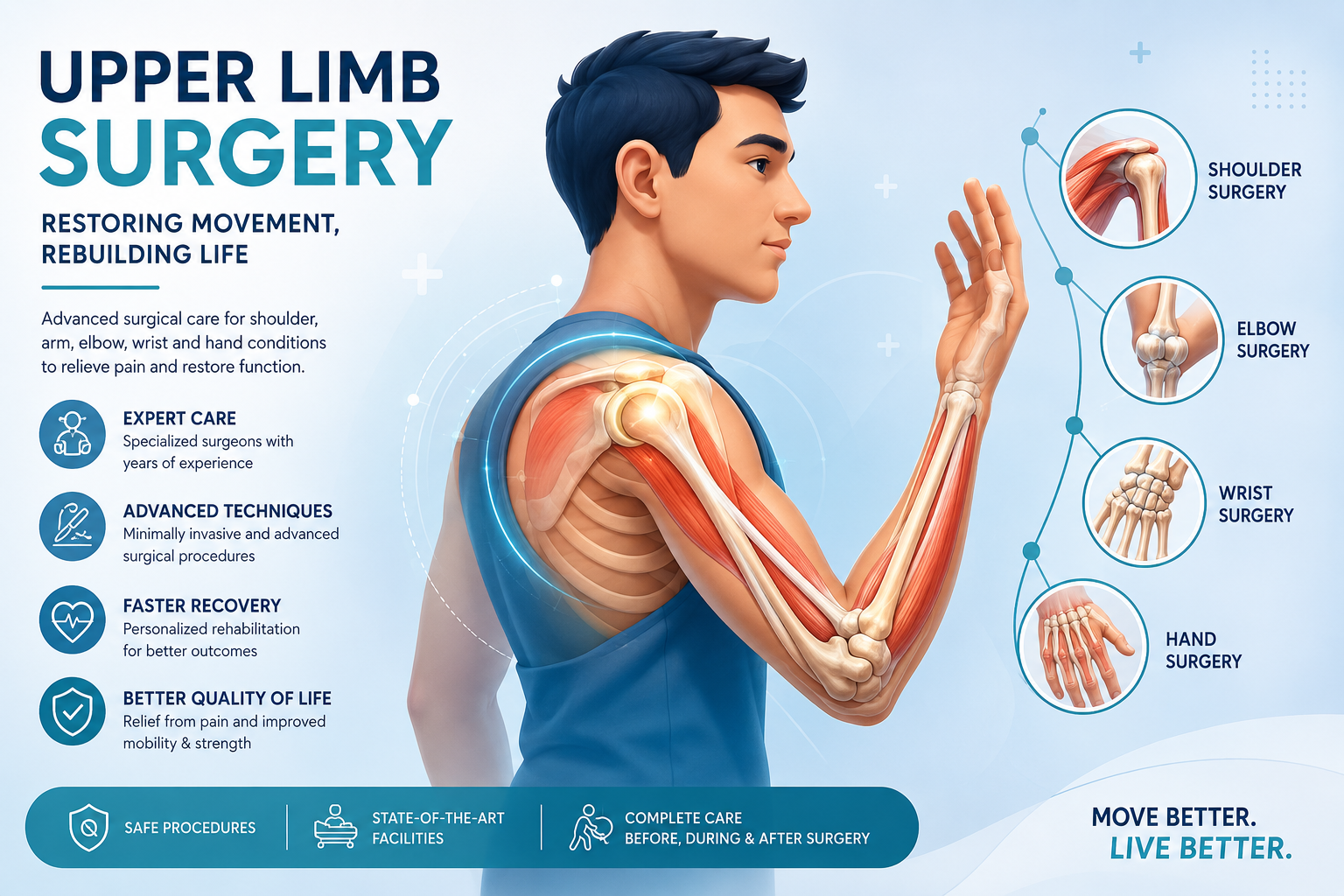
Upper limb surgery is a specialized branch of orthopedic surgery that focuses on diagnosing and treating conditions affecting the shoulder, arm, elbow, forearm, wrist, and hand. These procedures help restore function, reduce pain, and improve the quality of life for patients suffering from injuries, deformities, or degenerative conditions.
When is Upper Limb Surgery Required?
Your orthopedic surgeon may recommend upper limb surgery when conservative treatments such as medications, physiotherapy, or injections fail to provide adequate relief.
- Fractures of the shoulder, arm, elbow, wrist, or hand
- Rotator cuff tears
- Frozen shoulder
- Tennis elbow and golfer’s elbow
- Carpal tunnel syndrome
- Nerve compression disorders
- Ligament and tendon injuries
- Arthritis affecting the shoulder, elbow, or wrist
- Congenital deformities
Common Upper Limb Surgical Procedures
1. Shoulder Arthroscopy
A minimally invasive procedure used to diagnose and treat shoulder problems such as rotator cuff tears, impingement syndrome, and instability.
2. Rotator Cuff Repair
This surgery repairs torn shoulder tendons and helps restore normal shoulder movement and strength.
3. Elbow Surgery
Performed to treat fractures, ligament injuries, arthritis, and chronic elbow pain conditions.
4. Wrist and Hand Surgery
Used for treating fractures, carpal tunnel syndrome, tendon injuries, trigger finger, and other hand disorders.
5. Nerve Decompression Surgery
This procedure relieves pressure on compressed nerves to reduce pain, numbness, and weakness.
Benefits of Upper Limb Surgery
- Relief from chronic pain
- Improved joint mobility
- Restoration of hand and arm function
- Enhanced quality of life
- Faster return to daily activities
- Better strength and stability
Recovery After Surgery
Recovery depends on the type of surgery performed. Patients are generally advised to follow a structured rehabilitation program that may include physiotherapy, exercises, and follow-up consultations.
- Follow postoperative instructions carefully
- Attend all physiotherapy sessions
- Avoid heavy lifting during recovery
- Maintain regular follow-up visits
Why Choose Expert Orthopedic Care?
Modern upper limb surgery techniques use advanced diagnostic tools, minimally invasive procedures, and personalized rehabilitation plans to ensure the best outcomes. Early diagnosis and timely treatment can significantly improve recovery and long-term function.
Conclusion
Upper limb surgery offers effective solutions for a wide range of shoulder, arm, elbow, wrist, and hand conditions. If you are experiencing persistent pain, limited movement, or difficulty performing daily activities, consult an experienced orthopedic specialist to explore the most suitable treatment options.