
Cervical Spine Treatment
Advanced Treatment for Neck Pain, Cervical Spondylosis & Nerve Compression
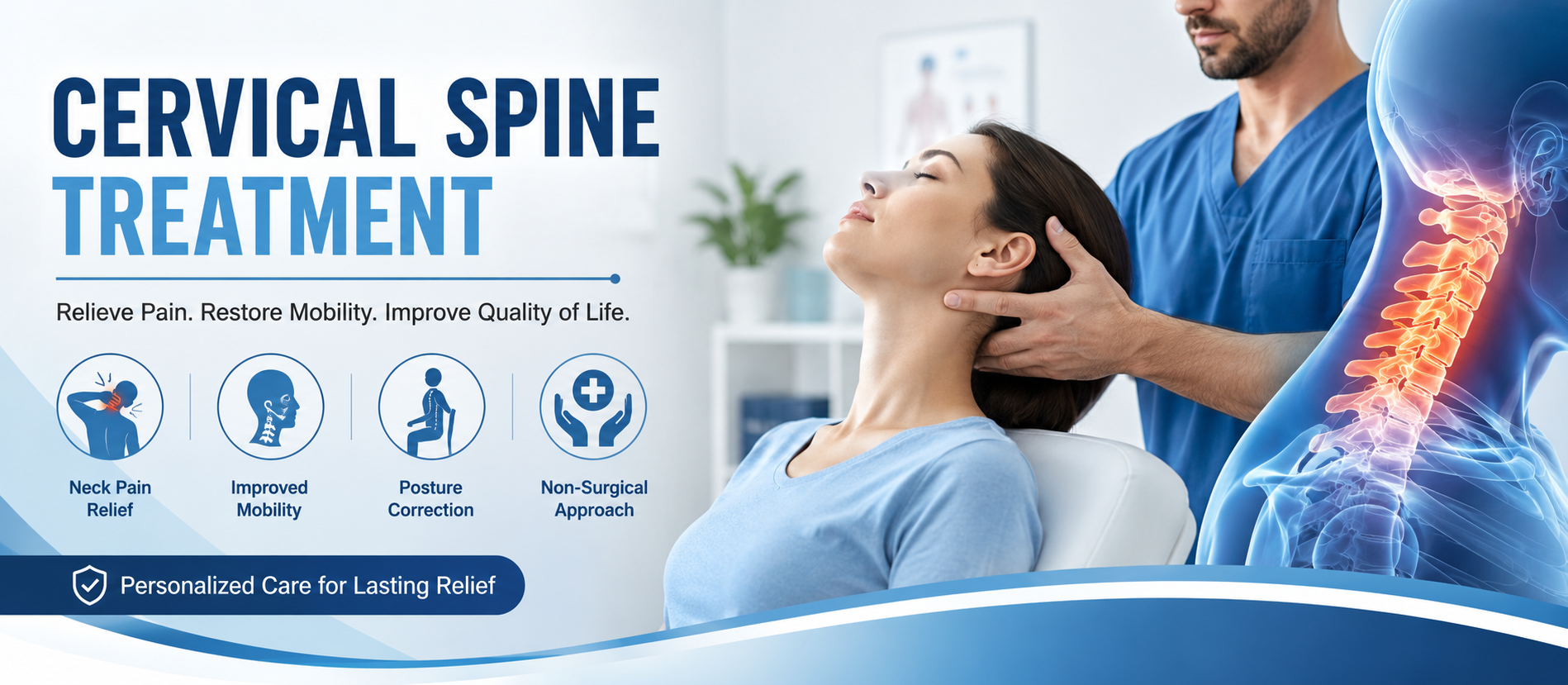
Expert cervical spine treatment for neck pain, cervical spondylosis, slipped disc and nerve compression using medication, physiotherapy and surgery.
What Is Cervical Spine Disorder?
The cervical spine refers to the upper part of the spine located in the neck region. Cervical spine disorders occur due to disc degeneration, nerve compression, injury, poor posture, or age-related changes. These conditions can lead to neck pain, stiffness, headaches, and radiating pain into the shoulders and arms.
Causes & Risk Factors
Common causes of neck pain and cervical spine degeneration
Poor Posture
Long hours of sitting or screen use increases risk.
Aging
Natural disc degeneration occurs with age.
Sedentary Lifestyle
Lack of movement weakens spinal support.
Injury
Accidents or trauma can damage cervical structures.
Heavy Lifting
Improper lifting techniques strain the neck.
Symptoms of Cervical Spine Problems
Common symptoms include neck pain, stiffness, shoulder pain, radiating arm pain, tingling or numbness in hands, headaches, and reduced neck mobility.
Neck Pain
Pain in the neck that may worsen with movement or posture.
Stiffness
Reduced flexibility in the neck region.
Radiating Pain
Pain may spread to shoulders and arms.
Numbness
Tingling or numbness in hands due to nerve compression.
Headache
Pain originating from cervical spine issues.
Specialist Explains Cervical Spine Treatment
Spine specialist explains cervical disc problems, nerve compression, treatment options and surgery
Cervical Spine Treatment
Imaging, procedure stages, and rehabilitation milestones.
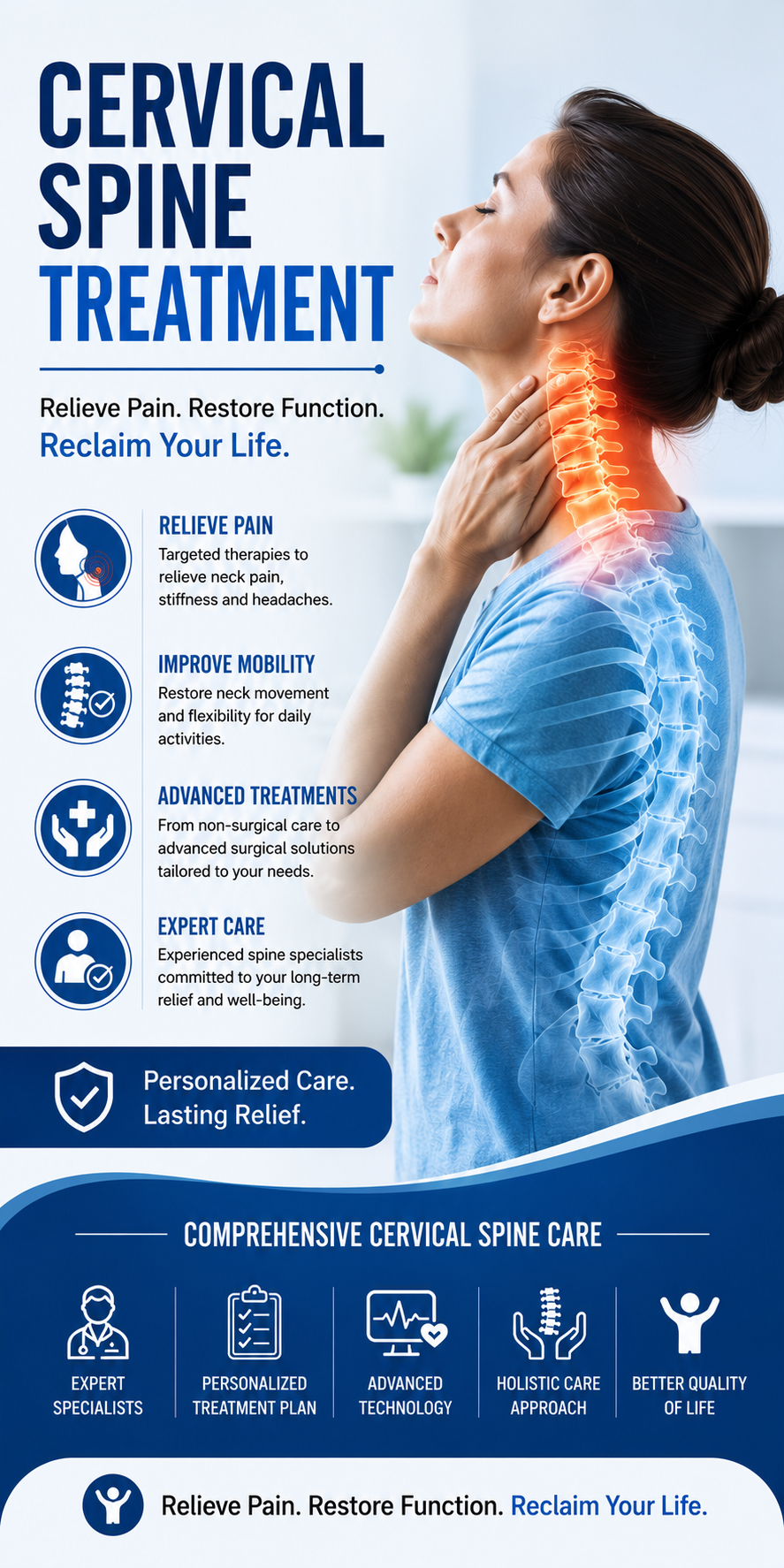
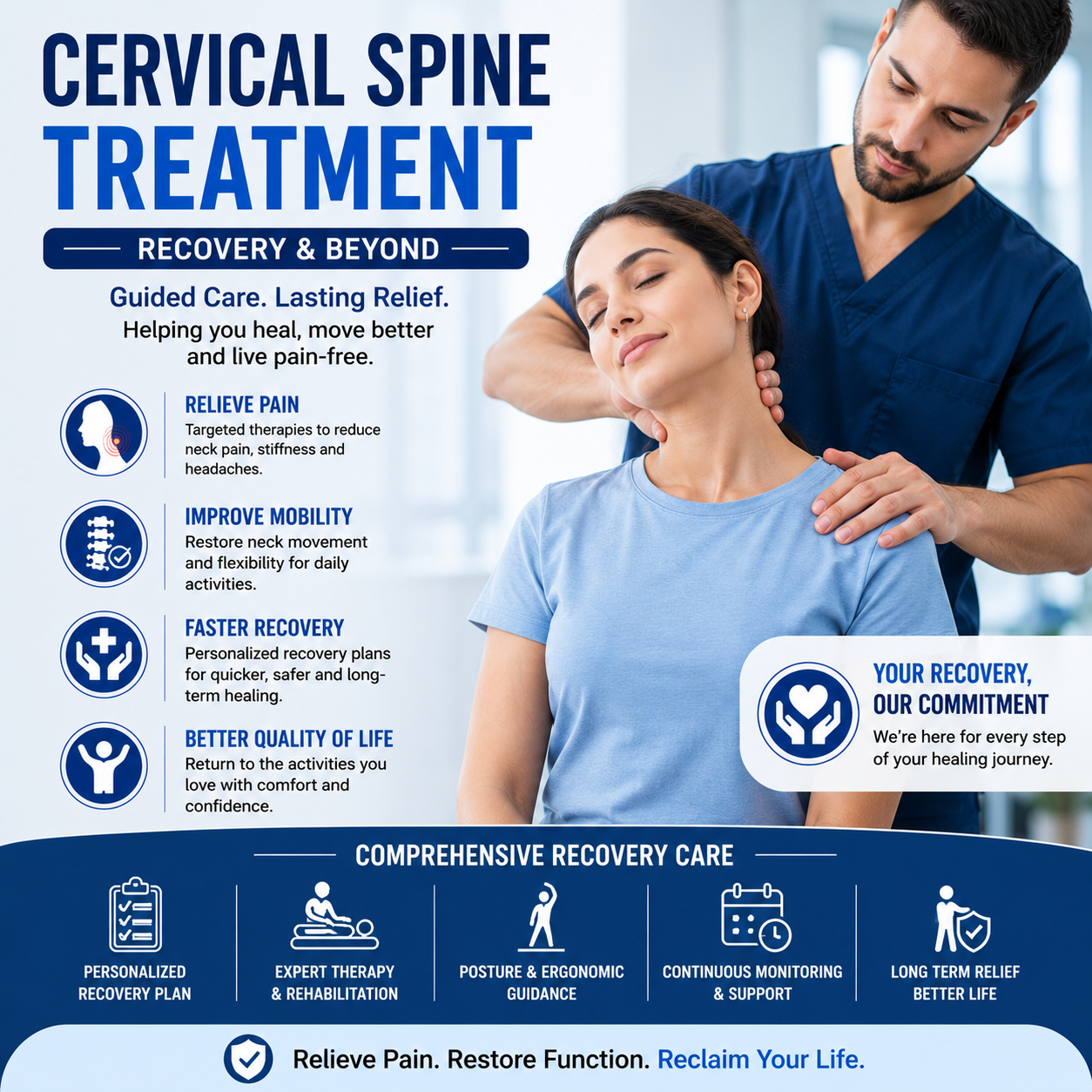
Treatment Options for Cervical Spine Disorders
Treatment depends on severity and may include rest, medications, physiotherapy, posture correction, cervical traction, injections, or surgery in severe nerve compression cases.
Posture Correction
Improving posture reduces strain on the cervical spine.
Physiotherapy
Strengthening neck muscles improves stability.
Medication
Pain and inflammation control with prescribed drugs.
Epidural Steroid Injections
Reduce nerve inflammation and pain.
Nerve Root Blocks
Targeted injections for severe nerve pain relief.
Anterior Cervical Discectomy
Removes damaged disc causing nerve compression.
Spinal Fusion Surgery
Stabilizes affected cervical spine segments.
Cervical Disc Replacement
Replaces damaged disc to preserve motion.
Recovery Timeline for Cervical Spine Treatment
Recovery varies based on condition severity. Most patients improve with conservative care, while surgical cases require structured rehabilitation.
-
Week 1-2
Pain Management Medication and rest reduce inflammation and pain.
-
Weeks 3-6
Physiotherapy Phase Exercises improve posture, strength, and mobility.
-
1-3 Months
Functional Recovery Gradual improvement in symptoms and daily function.
-
3+ Months
Long-Term Management Lifestyle changes and exercises prevent recurrence.