
Lower Limb Trauma Treatment
Expert Care for Hip, Thigh, Knee, Leg, Ankle & Foot Injuries
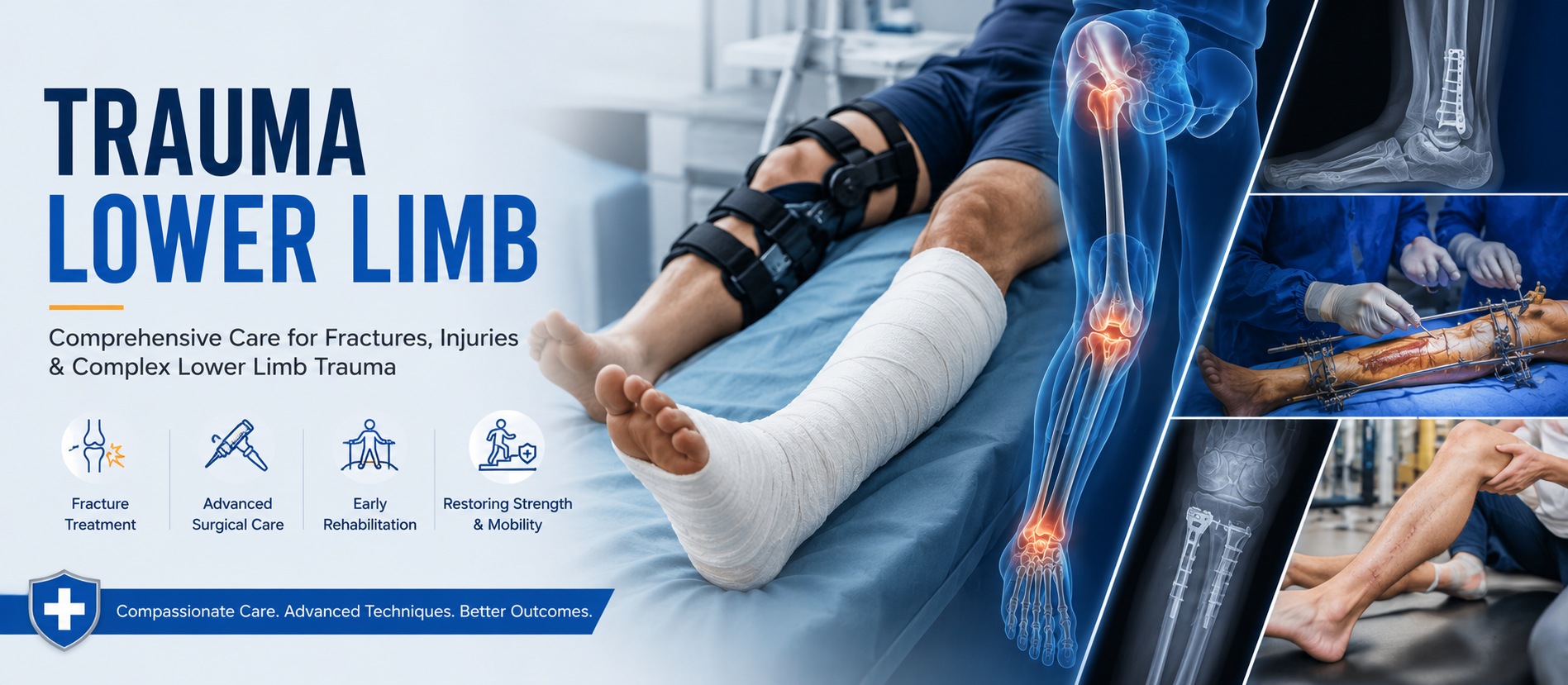
Advanced lower limb trauma treatment for fractures, dislocations, ligament injuries and accident-related trauma affecting the hip, knee, leg, ankle and foot.
What Is Lower Limb Trauma?
Lower limb trauma refers to injuries involving the hip, pelvis, thigh, knee, leg, ankle, and foot. These injuries commonly result from road traffic accidents, falls, sports injuries, workplace accidents, or high-impact trauma. Proper diagnosis and timely treatment are essential to restore mobility and prevent long-term disability.
Causes & Risk Factors
Common causes of lower limb fractures, ligament injuries, and trauma
Road Traffic Accidents
Major cause of severe lower limb fractures and injuries.
Sports Injuries
High-impact activities increase injury risk.
Falls
Falls commonly affect the hip, knee, ankle, and foot.
Workplace Accidents
Industrial and construction injuries may cause significant trauma.
Osteoporosis
Reduced bone strength increases fracture risk.
Symptoms of Lower Limb Trauma
Patients with lower limb trauma may experience severe pain, swelling, bruising, difficulty walking, deformity, instability, and reduced movement depending on the severity and location of the injury.
Severe Pain
Pain that worsens during standing or walking.
Swelling
Inflammation around the injured area.
Bruising
Visible discoloration following injury.
Difficulty Walking
Inability or discomfort while bearing weight.
Deformity
Abnormal limb alignment suggesting fracture or dislocation.
Specialist Explains Lower Limb Trauma Treatment
Orthopedic specialist explains diagnosis, treatment, surgery, and recovery after lower limb trauma
Lower Limb Trauma Treatment
Imaging, procedure stages, and rehabilitation milestones.
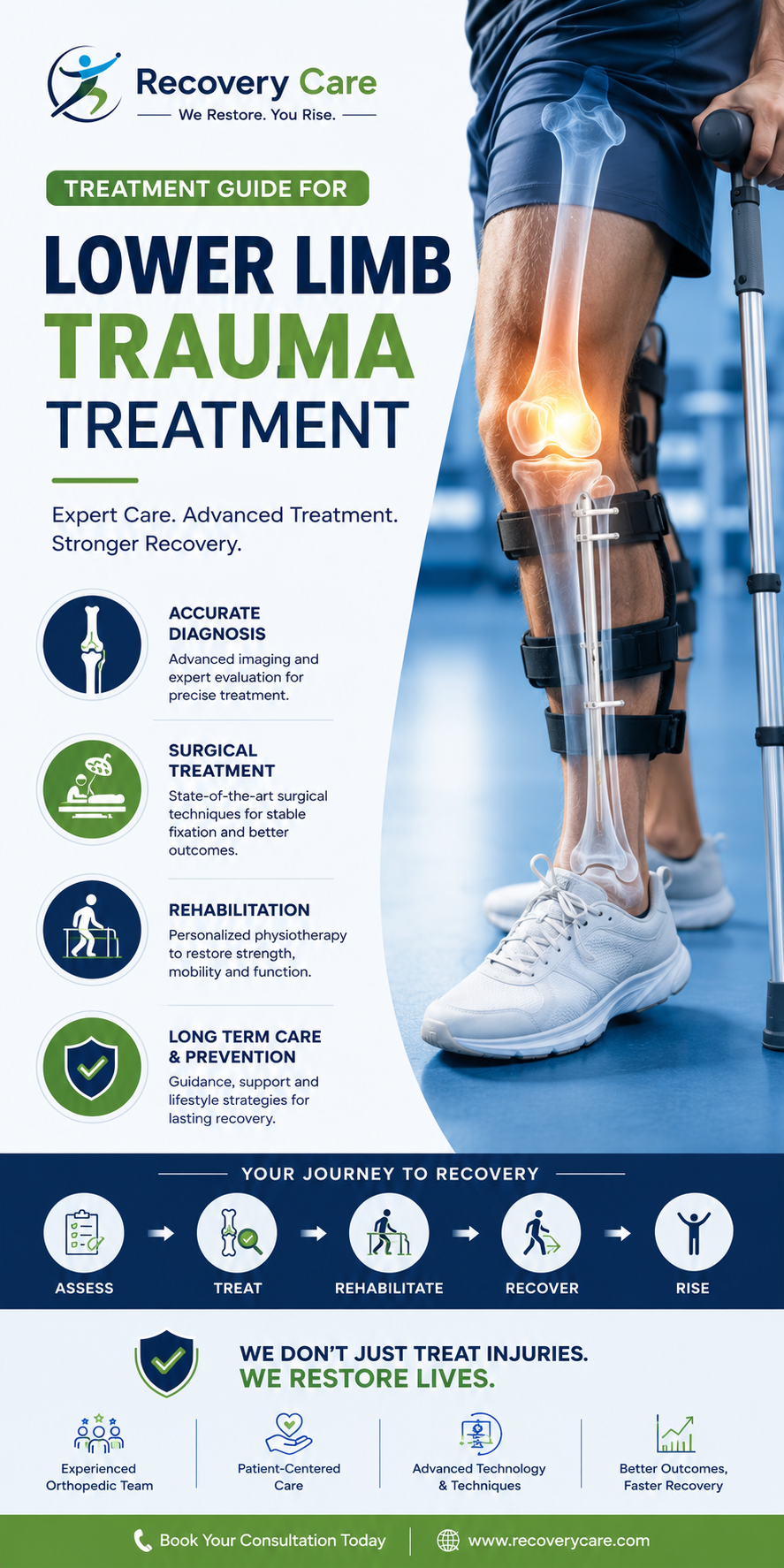
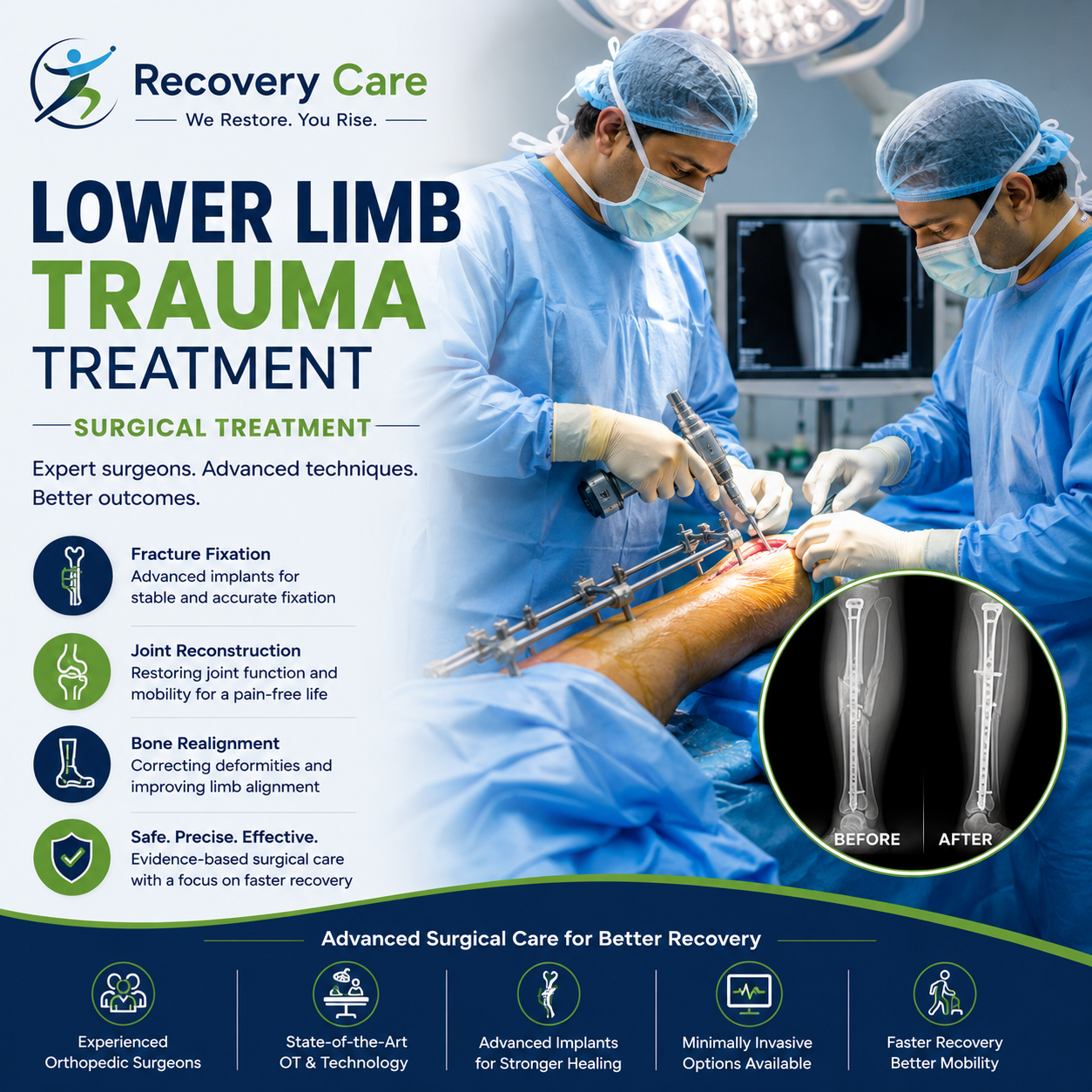
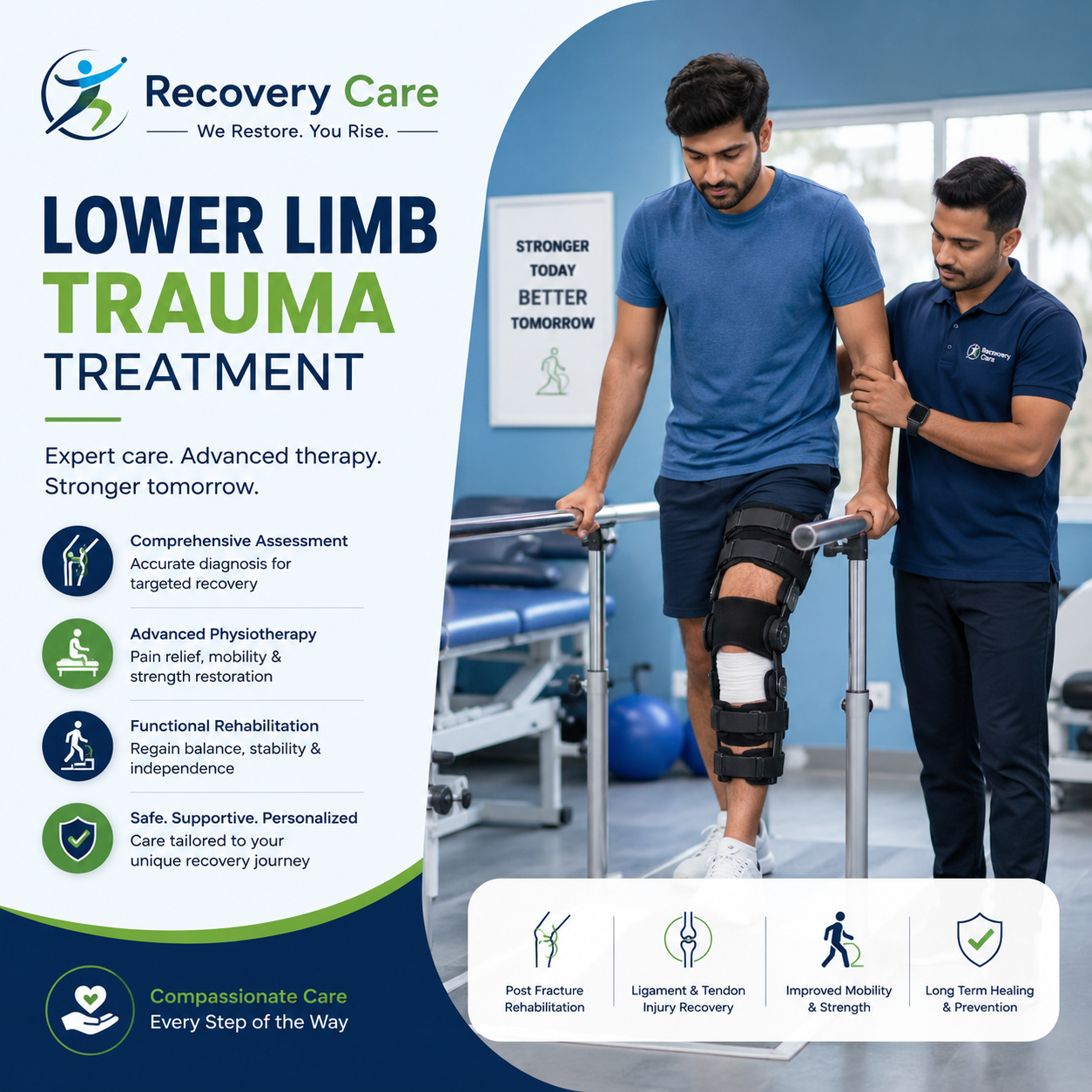
Treatment Options for Lower Limb Trauma
Treatment depends on the type and severity of injury. Conservative treatment may be suitable for minor injuries, while complex fractures, ligament tears, and joint injuries often require surgical management followed by structured rehabilitation.
Immobilization
Braces, casts, or supports help protect injured structures.
Pain & Inflammation Control
Medication and supportive care reduce symptoms.
Physiotherapy
Rehabilitation improves movement, strength, and stability.
Therapeutic Injections
Used selectively for persistent inflammation and joint pain.
Image-Guided Procedures
Targeted treatment for selected soft tissue injuries.
Fracture Fixation
Plates, screws, rods, or nails stabilize broken bones.
Ligament Reconstruction
Repair or reconstruction of damaged ligaments.
Joint Reconstruction
Surgical restoration of severely injured joints.
Recovery Timeline for Lower Limb Trauma
Recovery varies according to the injury, treatment method, age, overall health, and rehabilitation participation. Most patients gradually regain mobility, strength, and confidence with proper treatment.
-
Week 1-2
Stabilization Phase Pain control, swelling reduction, and injury stabilization.
-
Week 3-6
Healing Phase Fractures and soft tissues begin healing.
-
Week 6-12
Mobility Recovery Gradual return of movement and weight-bearing.
-
3-6 Months
Functional Recovery Strength, balance, and daily activity restoration.