
Hip Fracture Treatment
Advanced Treatment for Hip Fractures, Broken Hips & Trauma Injuries
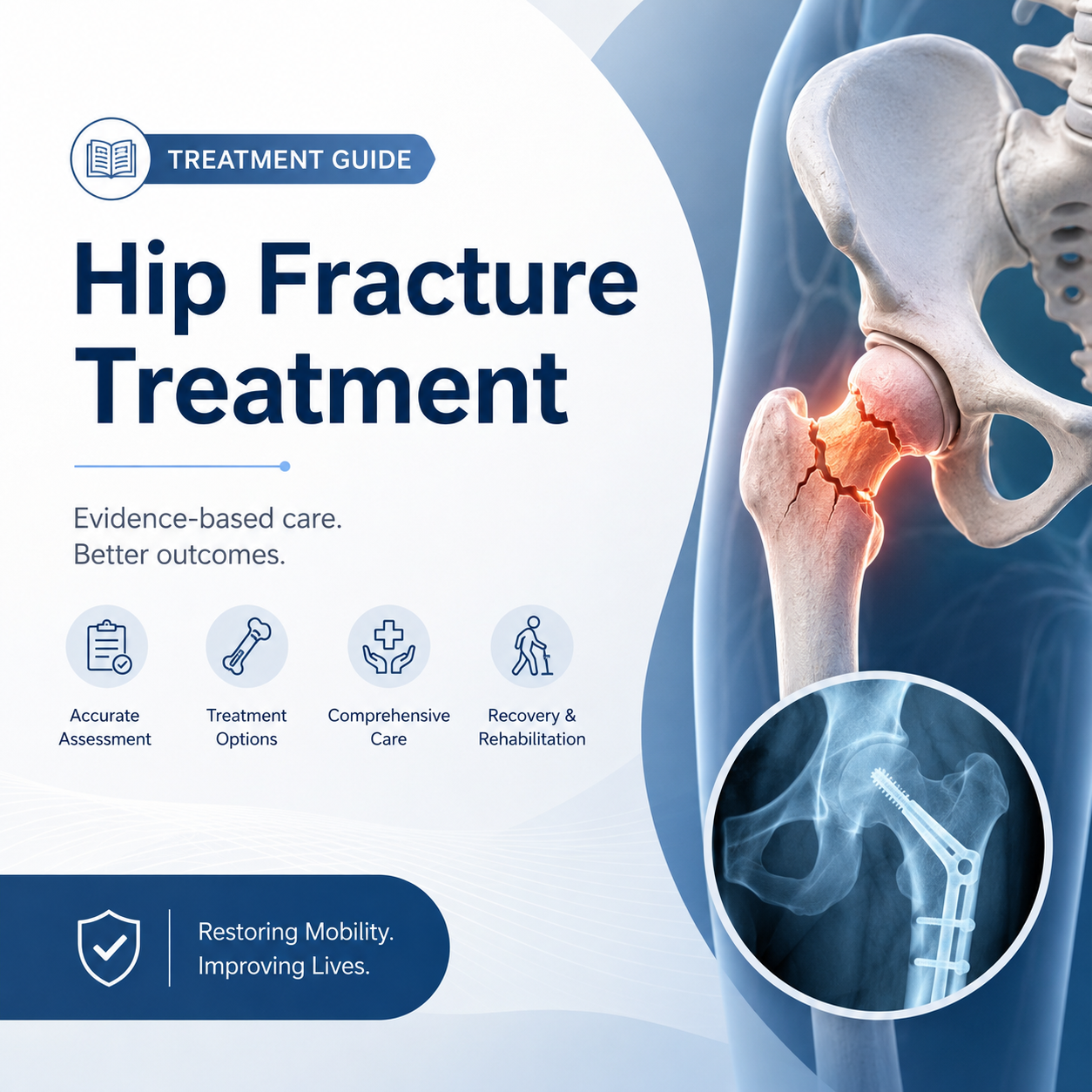
Expert hip fracture treatment including fracture fixation, hip replacement surgery and rehabilitation to restore mobility and independence.
What Is a Hip Fracture?
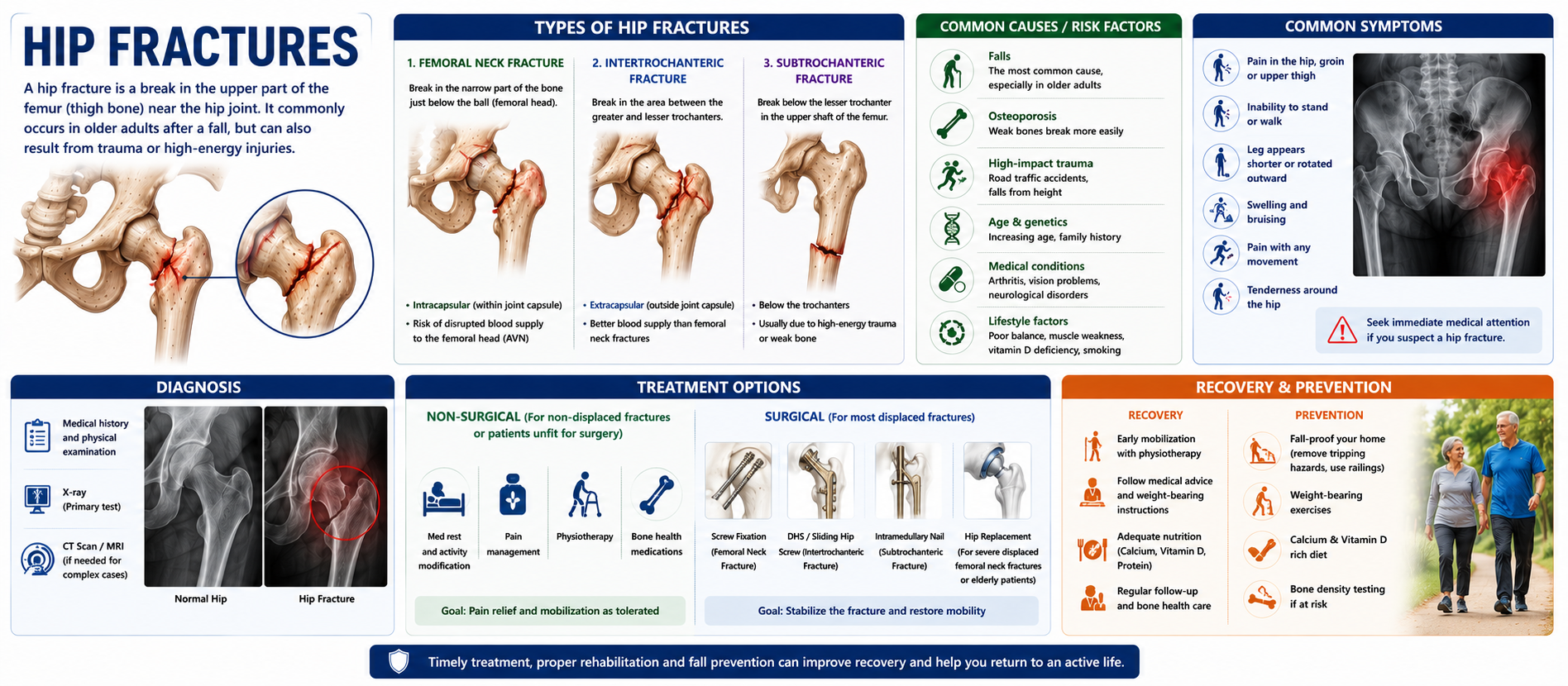
A hip fracture is a break in the upper portion of the femur near the hip joint. Hip fractures commonly occur in older adults due to falls and osteoporosis, but can also result from high-energy trauma such as road traffic accidents. Prompt treatment is essential to reduce complications and restore mobility.
Causes & Risk Factors
Common causes of hip fractures and risk factors affecting bone strength
Osteoporosis
Weak bones are more likely to fracture during a fall.
Advanced Age
Hip fracture risk increases significantly with age.
Falls
The most common cause of hip fractures in older adults.
Road Traffic Accidents
High-energy trauma can cause severe hip fractures.
Balance Problems
Poor balance increases the risk of falls and injury.
Symptoms of Hip Fractures
Patients often experience severe hip pain, inability to stand or walk, swelling, bruising, shortening of the affected leg, and difficulty moving the hip joint.
Severe Hip Pain
Pain is often sudden and intense following injury.
Difficulty Walking
Most patients cannot bear weight on the affected leg.
Bruising
Visible bruising may develop around the hip area.
Leg Shortening
The injured leg may appear shorter or rotated outward.
Restricted Movement
Difficulty moving the hip joint due to pain and instability.
Specialist Explains Hip Fracture Treatment
Orthopedic trauma specialist explains fracture fixation, hip replacement surgery, and rehabilitation after hip fractures
Hip Fracture Treatment
Imaging, procedure stages, and rehabilitation milestones.
Treatment Options for Hip Fractures
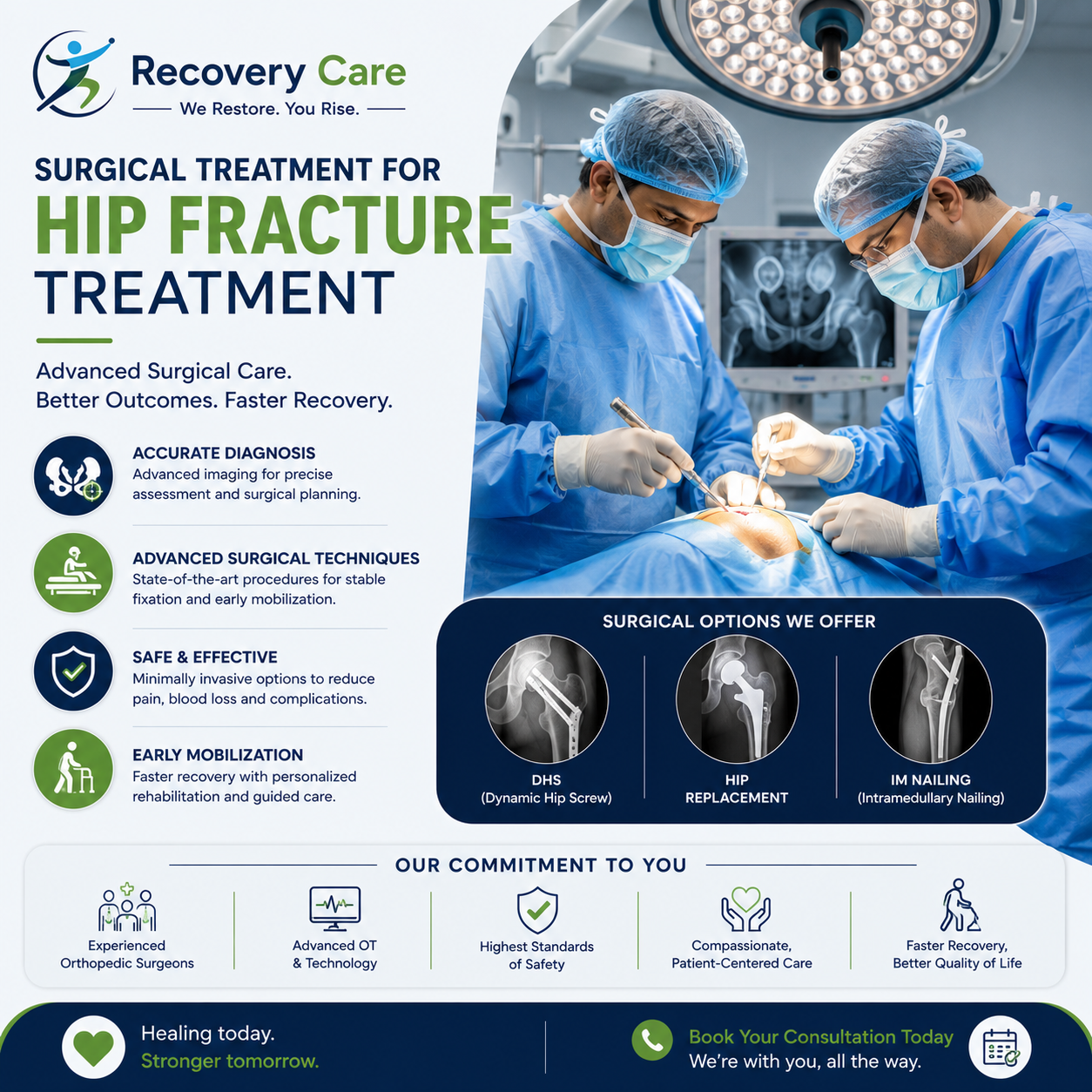
Most hip fractures require surgical treatment to stabilize the bone and allow early mobilization. The choice of procedure depends on fracture location, patient age, bone quality, and overall health.
Pain Management
Supportive treatment before and after surgery.
Mobility Assistance
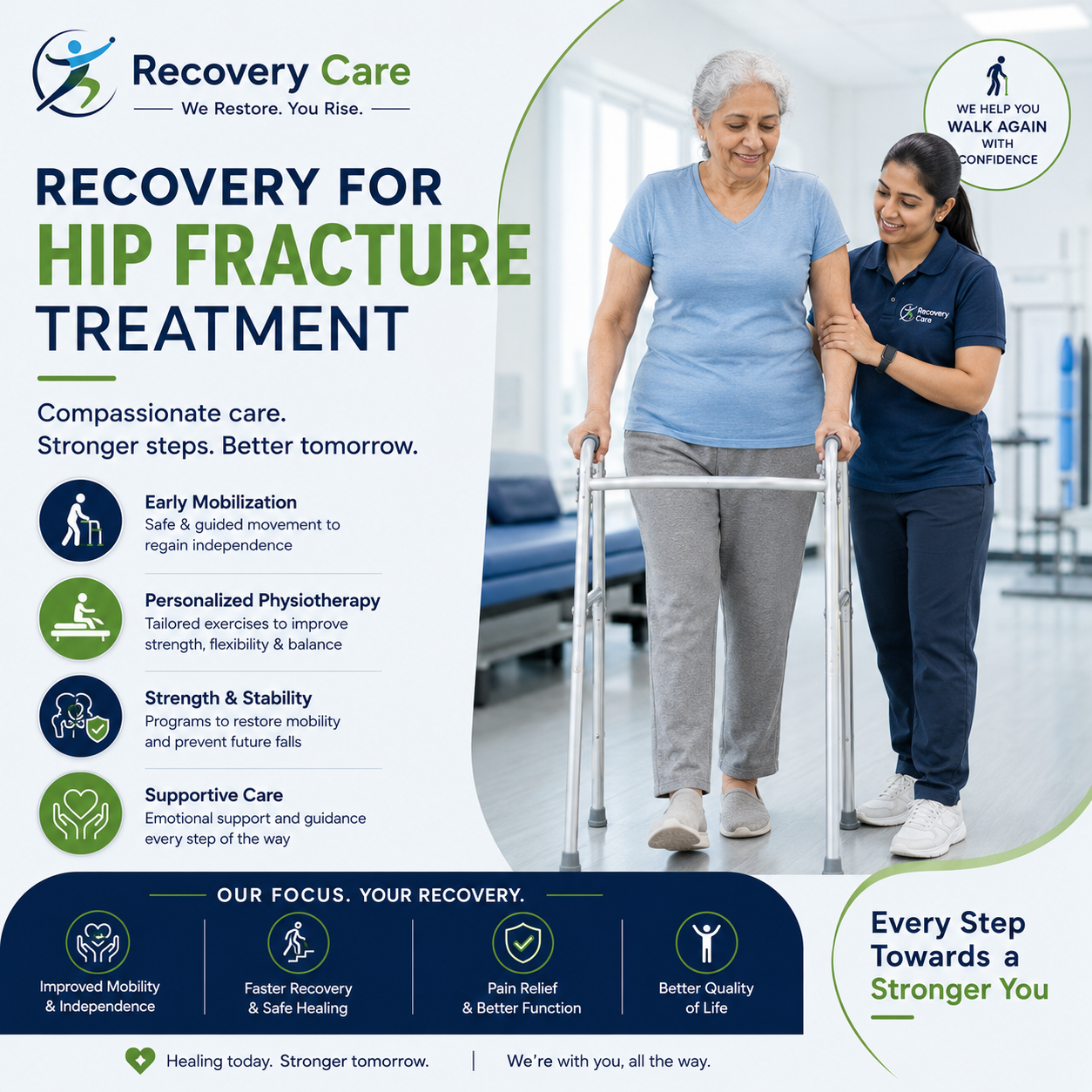
Walking aids and supervised rehabilitation improve safety.
Physiotherapy
Essential for restoring movement and strength.
Targeted Pain Relief Injections
Used selectively in specific situations for symptom control.
Hip Fracture Fixation
Plates, screws, or nails stabilize the broken bone.
Hemiarthroplasty
Partial hip replacement for selected fracture patterns.
Total Hip Replacement
Recommended for certain patients with complex fractures or pre-existing joint disease.
Recovery Timeline for Hip Fracture Treatment
Recovery varies depending on fracture severity, treatment method, age, and rehabilitation participation. Early mobilization and physiotherapy play a vital role in achieving the best outcomes.
-
Week 1-2
Surgical Stabilization Fracture fixation and early recovery begin.
-
Weeks 3-8
Mobility Rehabilitation Walking and strengthening exercises are gradually introduced.
-
Months 2-4
Functional Recovery Patients regain independence in daily activities.
-
Months 4-6
Long-Term Recovery Strength, balance, and mobility continue improving.