
Hip Arthritis Treatment
Advanced Care for Hip Pain, Joint Stiffness & Mobility Problems
Expert hip arthritis treatment including medication, physiotherapy, injections and hip replacement surgery to relieve pain and restore mobility.
What Is Hip Arthritis?
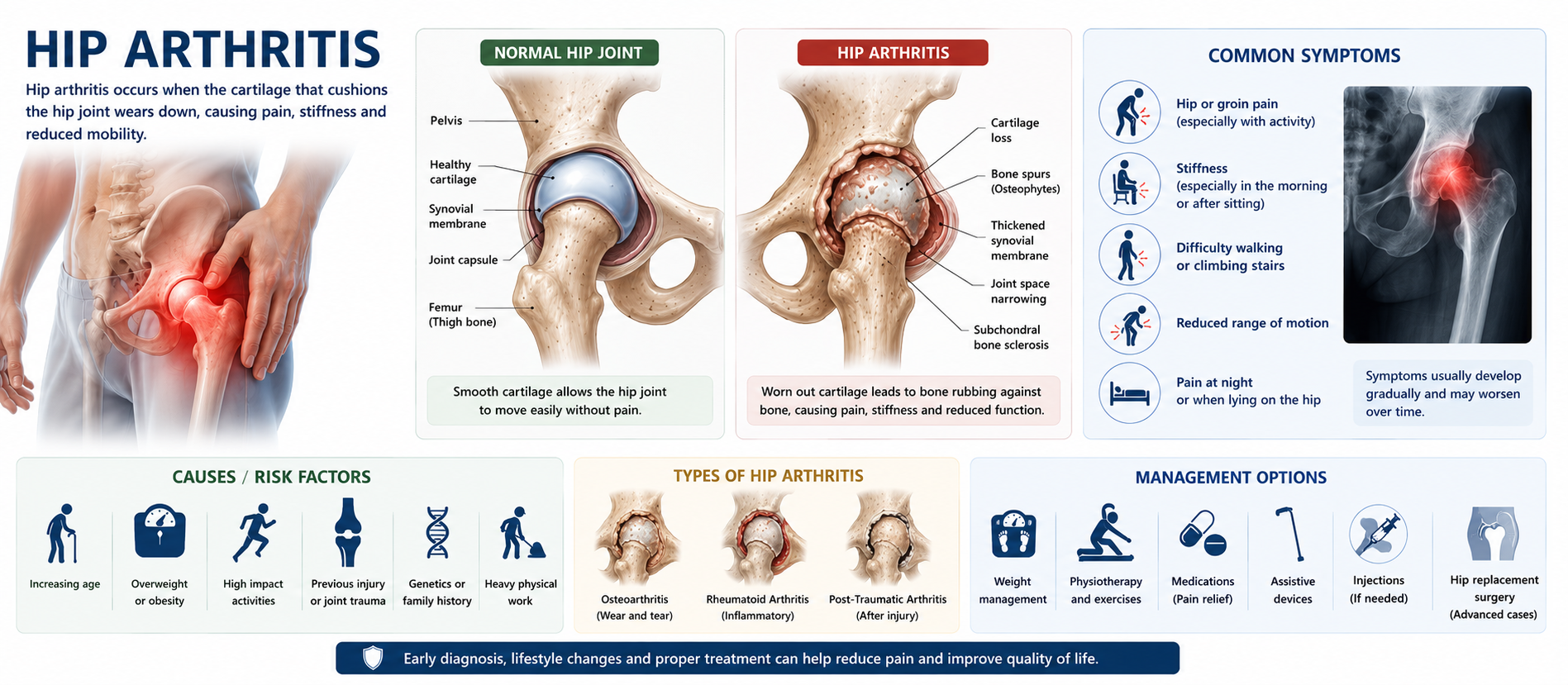
Hip arthritis is a condition in which the cartilage that cushions the hip joint gradually wears down. As the cartilage deteriorates, bones begin rubbing against each other, leading to pain, stiffness, inflammation, and reduced mobility. Osteoarthritis is the most common type of hip arthritis, although inflammatory arthritis can also affect the joint.
Causes & Risk Factors
Common causes of hip joint degeneration and arthritis-related pain
Aging
Natural cartilage degeneration increases with age.
Obesity
Excess body weight increases joint stress.
Previous Hip Injury
Past trauma can accelerate joint degeneration.
Family History
Genetic factors may increase susceptibility.
Inflammatory Arthritis
Conditions such as rheumatoid arthritis can damage the hip joint.
Symptoms of Hip Arthritis
Patients often experience groin pain, hip stiffness, difficulty walking, reduced range of motion, pain while climbing stairs, and discomfort during daily activities.
Hip Pain
Pain is often felt in the groin, buttock, or thigh region.
Joint Stiffness
Difficulty moving the hip, especially after rest.
Reduced Mobility
Limited ability to walk, bend, or perform daily activities.
Limping
Patients may develop an altered walking pattern.
Pain During Activity
Symptoms often worsen with prolonged standing or walking.
Specialist Explains Hip Arthritis Treatment
Orthopedic specialist explains hip arthritis diagnosis, treatment options, injections, and hip replacement surgery
Hip Arthritis Treatment
Imaging, procedure stages, and rehabilitation milestones.


Treatment Options for Hip Arthritis
Treatment focuses on reducing pain, improving joint mobility, preserving function, and enhancing quality of life. Depending on disease severity, treatment may include medications, physiotherapy, injections, or hip replacement surgery.
Lifestyle Modification
Weight management and activity adjustment reduce stress on the hip joint.
Medication
Pain relievers and anti-inflammatory medications help manage symptoms.
Physiotherapy
Exercises improve hip strength, flexibility, and stability.
Corticosteroid Injections
May provide temporary relief from inflammation and pain.
Viscosupplementation & Biologic Therapies
Selected patients may benefit from advanced injection therapies.
Hip Arthroscopy
Minimally invasive procedures may help selected patients.
Partial Hip Procedures
Used in specific cases depending on joint damage.
Total Hip Replacement
A highly effective solution for advanced hip arthritis causing severe pain and disability.
Recovery Timeline for Hip Arthritis Treatment
Recovery varies depending on treatment type and arthritis severity. Most patients achieve significant pain relief and improved mobility with appropriate treatment and rehabilitation.
-
Weeks 1-4
Symptom Management Pain reduction and improved daily function through conservative treatment.
-
1-3 Months
Mobility Improvement Physiotherapy and exercise improve strength and flexibility.
-
3-6 Months
Long-Term Joint Management Ongoing care helps maintain mobility and reduce symptoms.
-
3-6 Months After Surgery
Hip Replacement Recovery Most patients regain significant mobility and pain relief.