
Knee Osteoarthritis Treatment and Sports Injury Management: Complete Guide for Active Living
Introduction
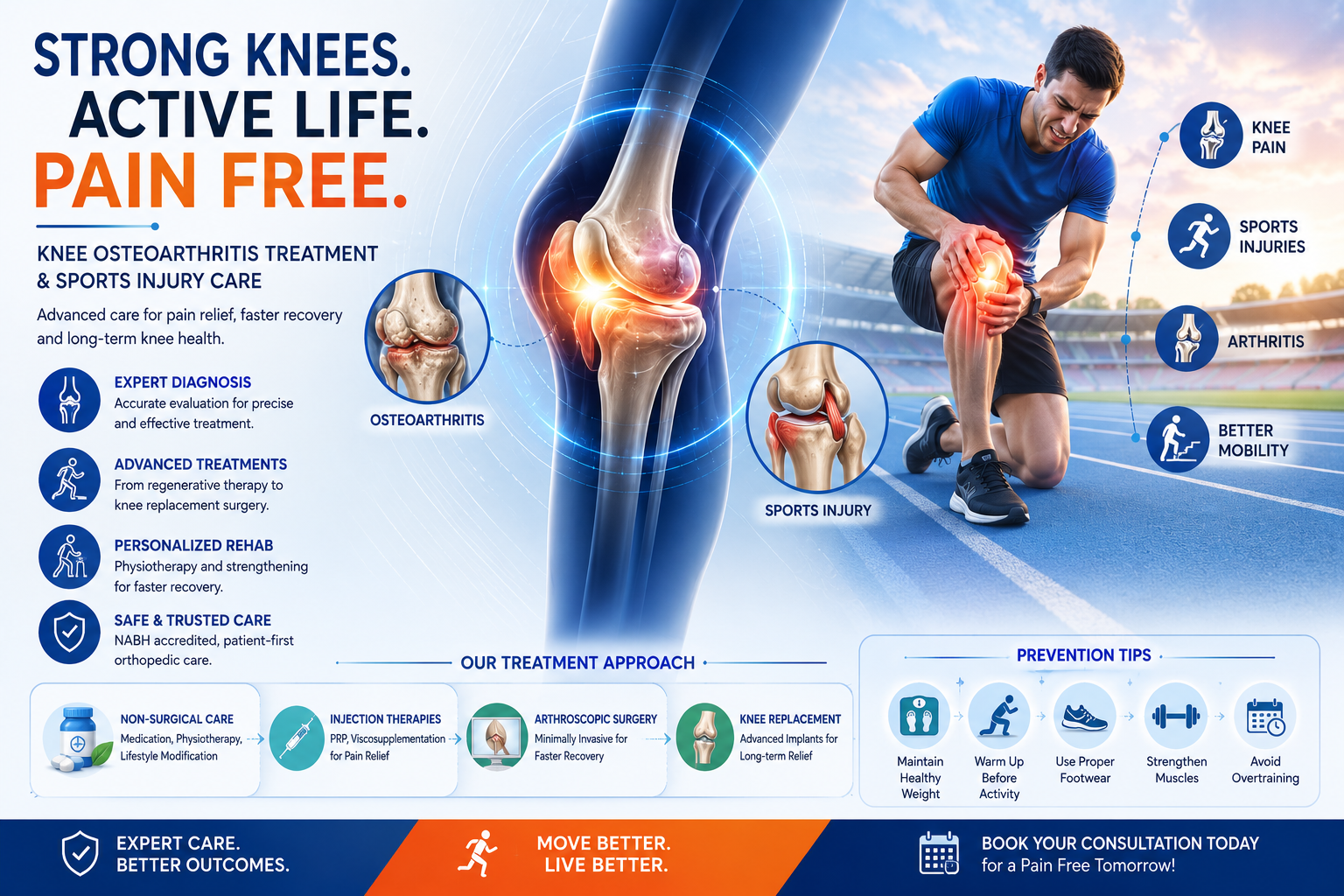
Knee pain is one of the most common orthopedic problems affecting people of all ages. While knee osteoarthritis is frequently seen in older adults, sports injuries can affect athletes and active individuals at any stage of life. Both conditions can significantly impact mobility, daily activities, and overall quality of life.
Modern orthopedic treatments offer effective solutions ranging from conservative management and physiotherapy to advanced surgical procedures. Early diagnosis and proper treatment can help patients regain mobility and return to their active lifestyles.
What is Knee Osteoarthritis?
Knee osteoarthritis is a degenerative joint disease that occurs when the protective cartilage cushioning the ends of bones gradually wears away. As the cartilage deteriorates, bones may rub against each other, causing pain, stiffness, swelling, and reduced joint function.
Common Symptoms of Knee Osteoarthritis
- Persistent knee pain during movement
- Morning stiffness
- Swelling around the knee joint
- Reduced range of motion
- Cracking or grinding sensation in the knee
- Difficulty walking, climbing stairs, or standing for long periods
Understanding Sports Injuries
Sports injuries occur due to sudden trauma, repetitive stress, overuse, or improper training techniques. The knee joint is particularly vulnerable because it bears significant weight and experiences substantial stress during physical activities.
Common Knee Sports Injuries
- Anterior Cruciate Ligament (ACL) Tears
- Meniscus Tears
- Posterior Cruciate Ligament (PCL) Injuries
- Medial Collateral Ligament (MCL) Injuries
- Patellar Tendinitis (Jumper’s Knee)
- Runner’s Knee
Causes and Risk Factors
Knee Osteoarthritis Risk Factors
- Advancing age
- Obesity and excess body weight
- Previous knee injuries
- Family history of arthritis
- Joint deformities
- Occupational stress on the knee joint
Sports Injury Risk Factors
- Inadequate warm-up exercises
- Poor training techniques
- Muscle weakness or imbalance
- Improper footwear
- Overtraining
- Sudden increase in activity levels
Diagnosis and Evaluation
Accurate diagnosis is essential for developing an effective treatment plan. Orthopedic specialists may recommend:
- Detailed clinical examination
- X-rays for joint assessment
- MRI scans for ligament and cartilage evaluation
- Blood tests when required
- Functional movement assessment
Treatment Options for Knee Osteoarthritis
Non-Surgical Treatments
- Physical therapy and rehabilitation
- Weight management programs
- Pain management medications
- Activity modification
- Knee braces and support devices
- Injection therapies
Surgical Treatments
- Arthroscopic procedures
- Partial knee replacement
- Total knee replacement surgery
- Corrective osteotomy procedures
Sports Injury Treatment and Rehabilitation
Most sports injuries respond well to a structured rehabilitation program. Treatment may include:
- Immediate injury management using the RICE protocol
- Physiotherapy and strengthening exercises
- Sports-specific rehabilitation
- Arthroscopic ligament reconstruction
- Meniscus repair surgery when necessary
Prevention Tips
- Maintain a healthy body weight
- Perform regular strengthening exercises
- Warm up before sports activities
- Use proper footwear and protective equipment
- Follow correct exercise techniques
- Allow adequate recovery between training sessions
When Should You Consult an Orthopedic Specialist?
Seek medical attention if you experience persistent knee pain, swelling, instability, difficulty walking, limited joint movement, or symptoms that interfere with your daily activities. Early intervention can prevent further damage and improve treatment outcomes.
Conclusion
Knee osteoarthritis and sports injuries are common conditions that can significantly affect mobility and quality of life. Fortunately, advancements in orthopedic care provide effective treatment options ranging from conservative therapies to minimally invasive and joint replacement procedures. Timely diagnosis, personalized treatment, and comprehensive rehabilitation are key to achieving the best outcomes and returning to an active, pain-free lifestyle.