
ACL & PCL Ligament Injury Treatment
Advanced Treatment for Knee Ligament Tears, Instability & Sports Injuries
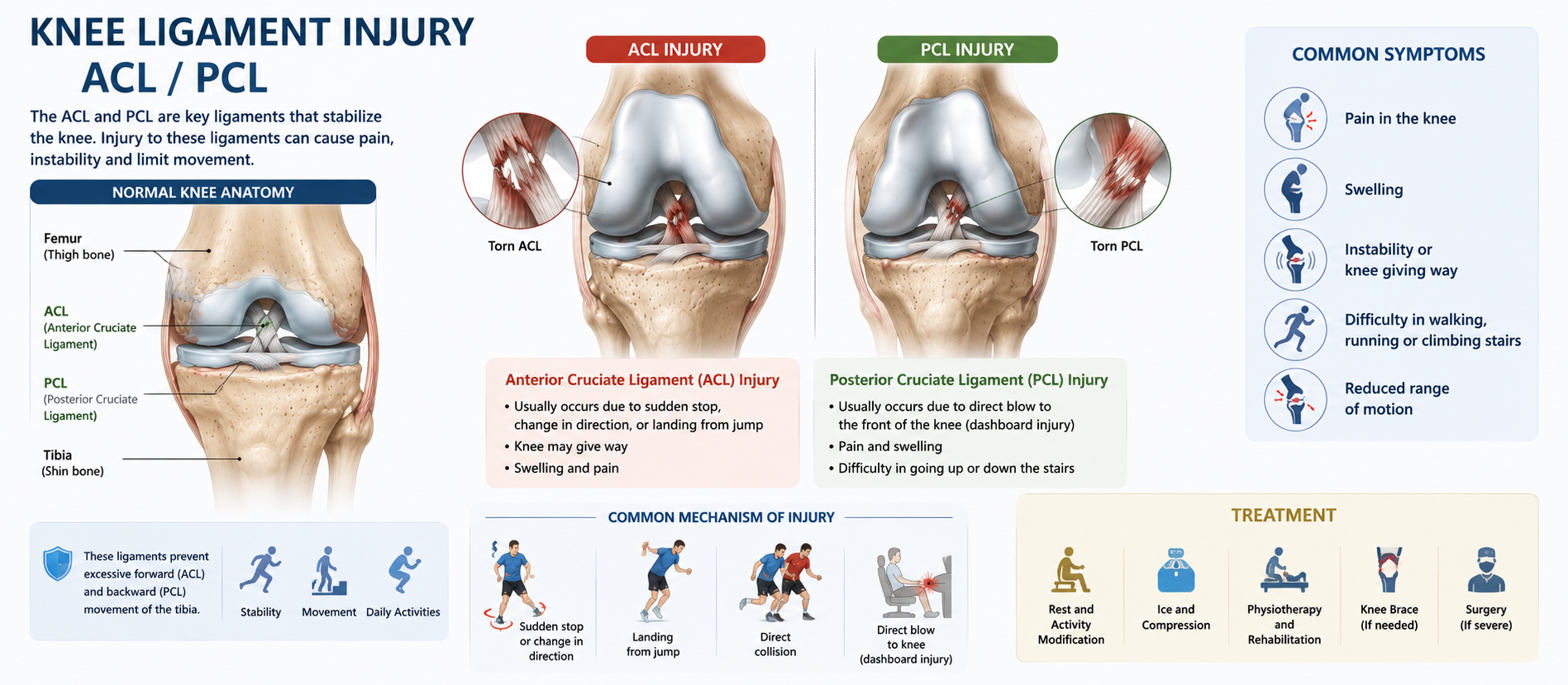
Expert ACL and PCL ligament injury treatment including physiotherapy, rehabilitation and ligament reconstruction surgery to restore knee stability and function.
What Are ACL & PCL Ligament Injuries?
ACL (Anterior Cruciate Ligament) and PCL (Posterior Cruciate Ligament) injuries are common knee ligament injuries that affect joint stability. These injuries frequently occur during sports activities, sudden twisting movements, road accidents, or direct trauma to the knee. Depending on the severity of the tear, treatment may involve rehabilitation or surgical reconstruction.
Causes & Risk Factors
Common causes of ACL and PCL ligament tears and knee instability
Sports Participation
High-impact sports significantly increase injury risk.
Sudden Direction Changes
Rapid pivoting movements can strain knee ligaments.
Previous Knee Injury
Prior injuries increase the likelihood of ligament tears.
Poor Landing Mechanics
Incorrect jumping and landing techniques increase stress on the ACL.
Road Traffic Accidents
Direct trauma can result in severe PCL injuries.
Symptoms of ACL & PCL Injuries
Patients may experience a popping sensation at the time of injury, immediate swelling, knee pain, instability, reduced range of motion, and difficulty walking or participating in sports activities.
Popping Sensation
Many patients hear or feel a pop at the time of injury.
Knee Swelling
Rapid swelling often develops within hours of injury.
Instability
The knee may feel unstable or give way during movement.
Pain
Pain varies depending on injury severity.
Reduced Mobility
Difficulty bending, straightening, or bearing weight on the knee.
Specialist Explains ACL & PCL Injury Treatment
Orthopedic knee specialist explains ligament injuries, reconstruction surgery, rehabilitation and return to sports
ACL & PCL Ligament Injury Treatment
Imaging, procedure stages, and rehabilitation milestones.
Treatment Options for ACL & PCL Ligament Injuries
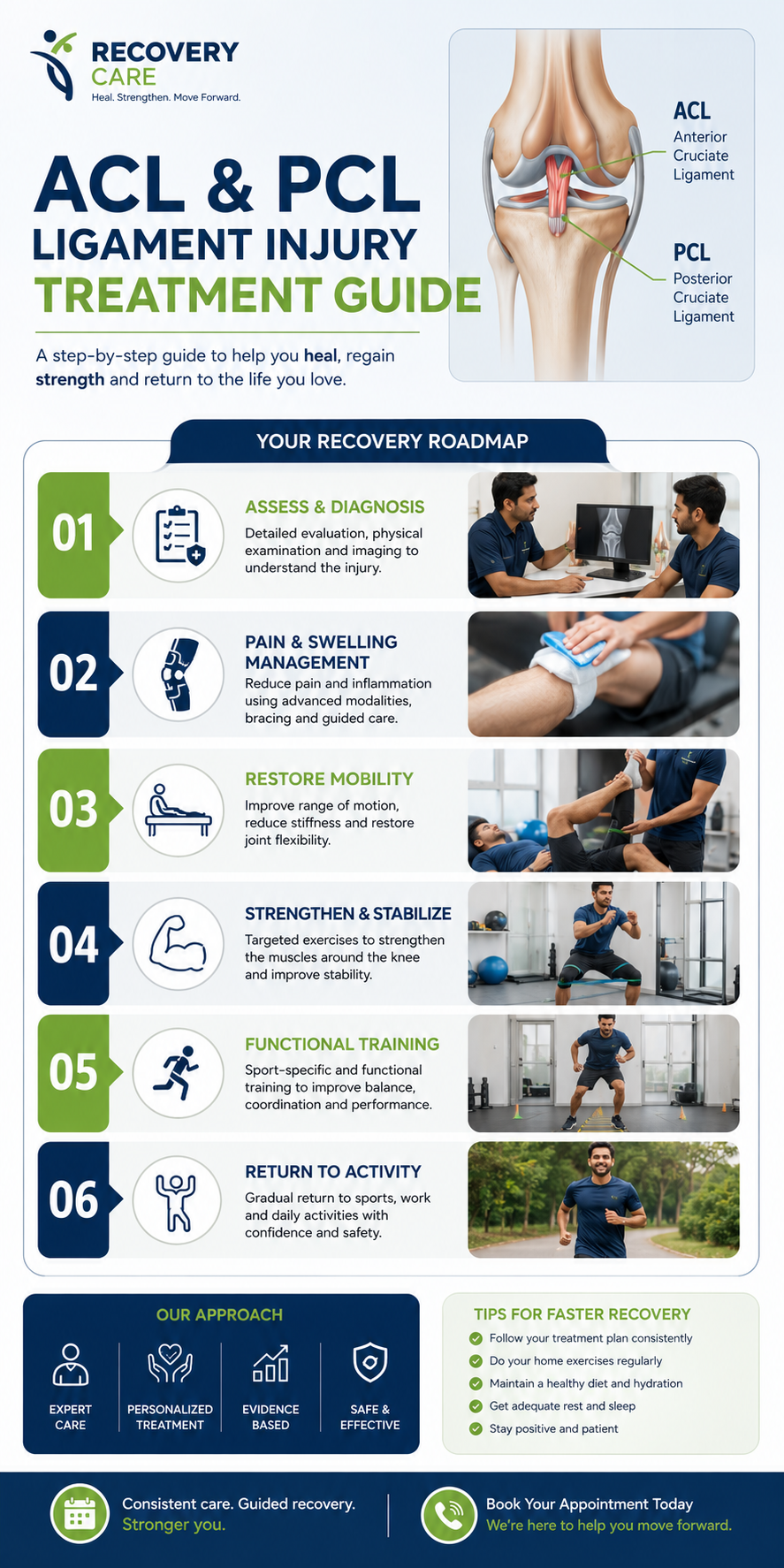
Treatment depends on the severity of the injury, patient activity level, and functional goals. Mild injuries may respond to rehabilitation, while complete ligament tears often require reconstruction surgery to restore knee stability.
Activity Modification
Avoid activities that worsen knee instability.
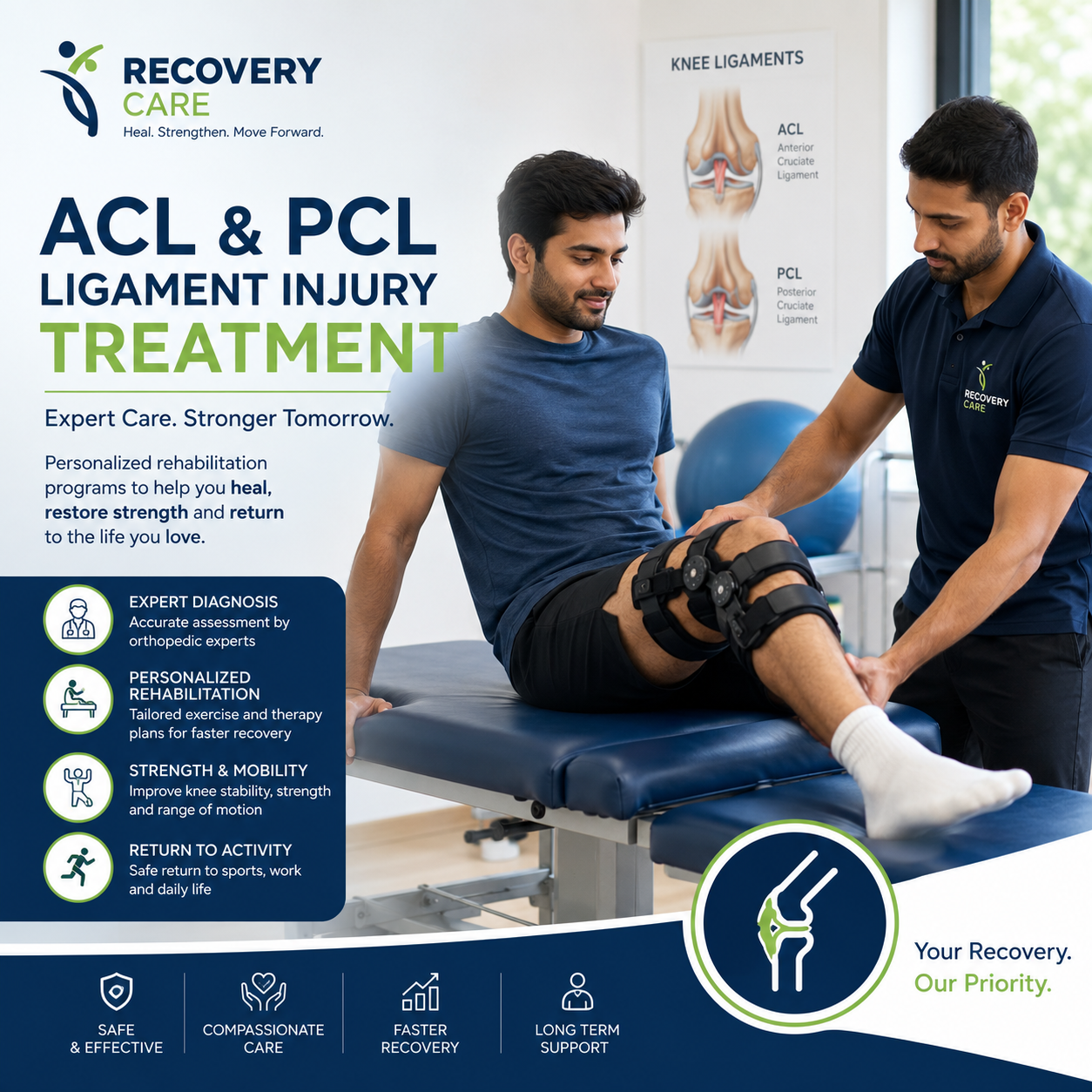
Physiotherapy
Strengthening and balance exercises improve knee function.
Knee Bracing
Braces may provide additional support during recovery.
PRP Injections
May be considered in selected ligament injuries to support healing.
Biologic Therapies
Used selectively as part of comprehensive treatment plans.
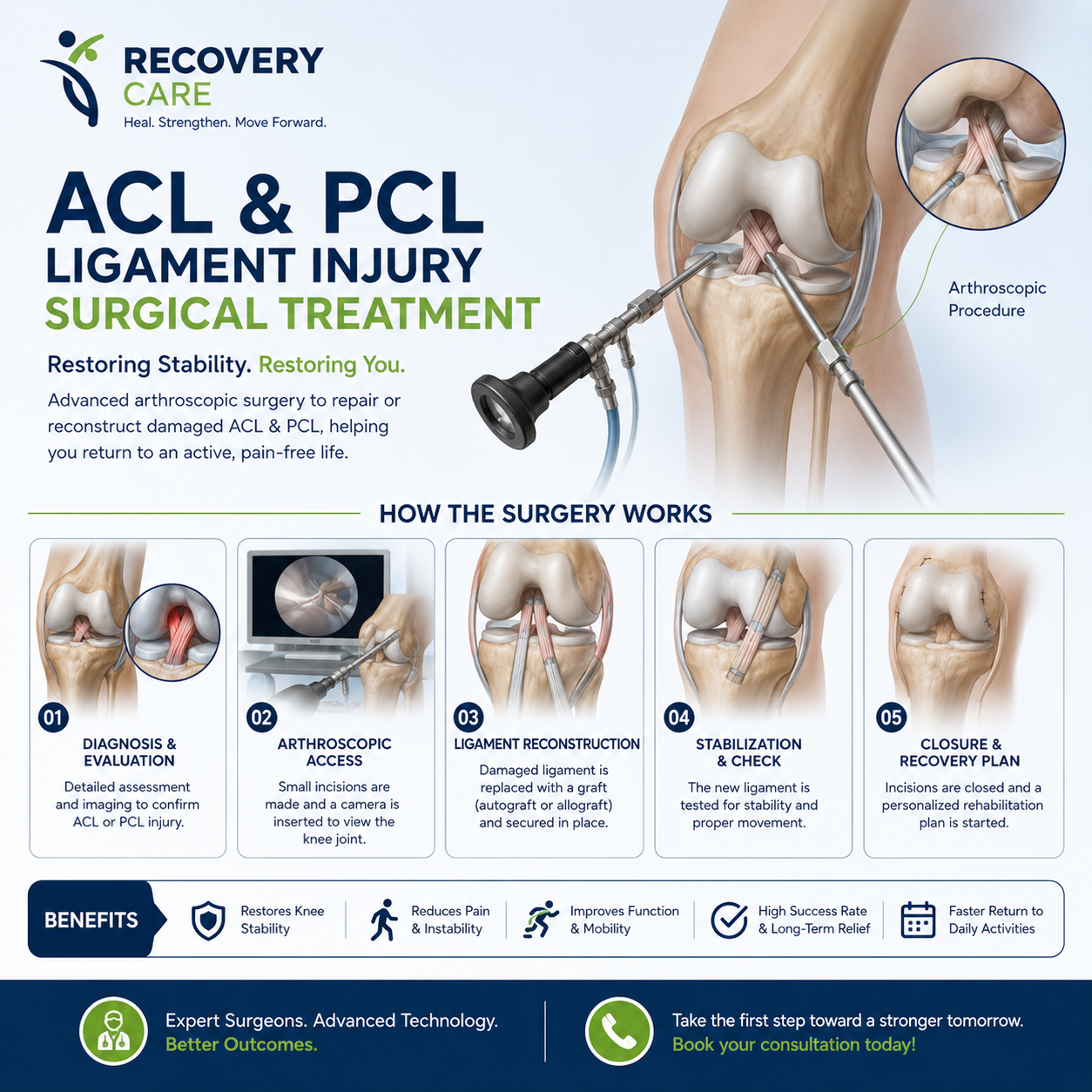
ACL Reconstruction Surgery
Replaces the torn ACL using a graft to restore knee stability.
PCL Reconstruction Surgery
Reconstructs the damaged PCL to improve knee function.
Combined Ligament Reconstruction
For patients with multiple ligament injuries affecting knee stability.
Recovery Timeline for ACL & PCL Treatment
Recovery varies according to injury severity and treatment type. Rehabilitation plays a critical role in restoring strength, balance, and knee function following injury or surgery.
-
Weeks 1-2
Pain & Swelling Control Initial healing and inflammation management.
-
Weeks 3-8
Rehabilitation Phase Restore motion, flexibility, and muscle strength.
-
Months 3-6
Advanced Strength Training Improve knee stability and functional movement.
-
Months 6-9
Return to Sports Gradual return to athletic activities after clearance.