
Avascular Necrosis (AVN) Hip Treatment
Advanced Treatment for Hip AVN, Femoral Head Damage & Joint Preservation
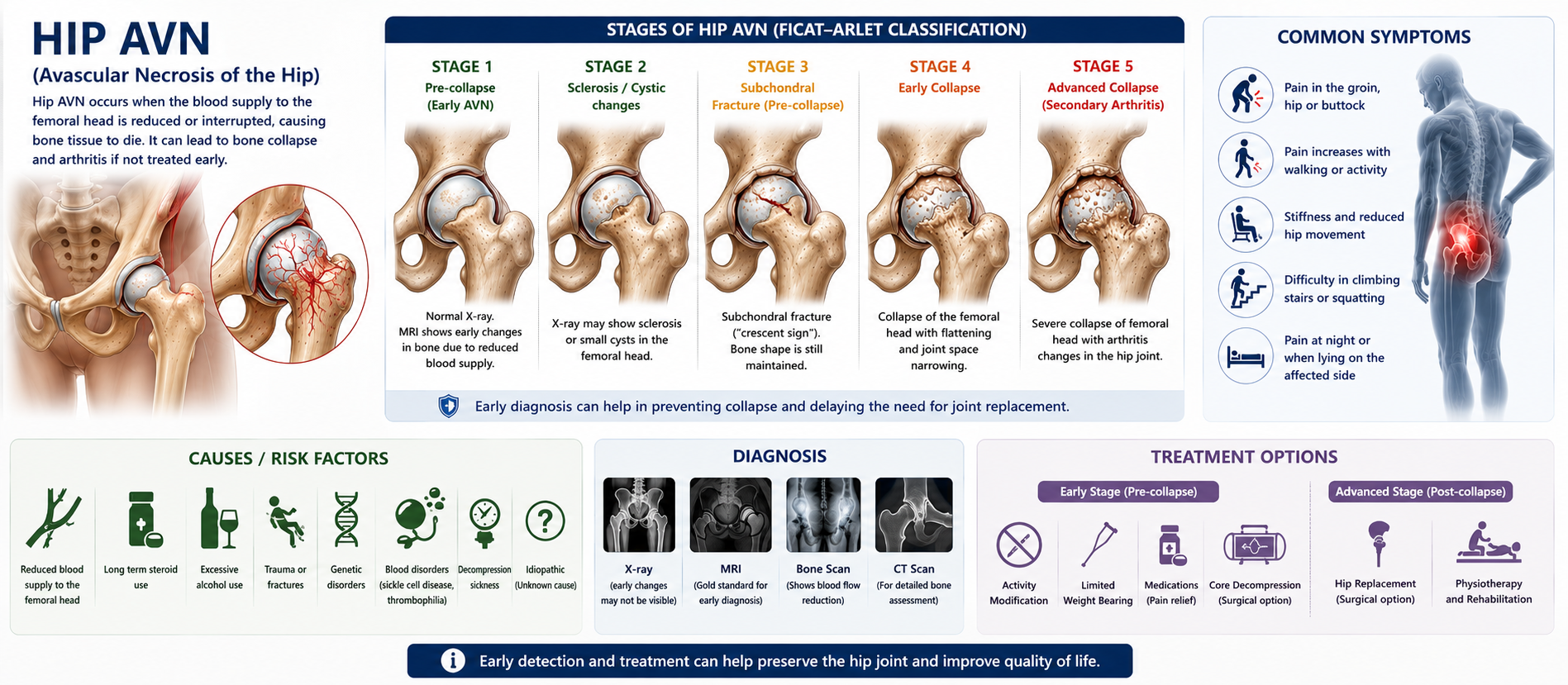
Expert AVN hip treatment including medications, core decompression and hip replacement surgery to relieve pain and preserve joint function.
What Is Avascular Necrosis (AVN) of the Hip?
Avascular necrosis (AVN) of the hip is a condition in which the blood supply to the femoral head is reduced or interrupted, leading to bone death and eventual collapse of the hip joint. Without timely treatment, AVN can cause severe pain, loss of mobility, and progressive joint damage.
Causes & Risk Factors
Common causes of reduced blood supply to the femoral head and progression of hip AVN
Long-Term Steroid Use
One of the most common non-traumatic causes of AVN.
Excessive Alcohol Consumption
May affect blood supply to the femoral head.
Hip Trauma
Fractures and dislocations can damage blood vessels supplying the hip.
Blood Disorders
Certain conditions increase the risk of impaired circulation.
Autoimmune Diseases
Some inflammatory disorders are associated with AVN development.
Symptoms of Hip AVN
Patients commonly experience groin pain, hip stiffness, limping, reduced range of motion, pain during walking, and progressive difficulty performing daily activities.
Groin Pain
Pain is commonly felt deep in the groin or hip region.
Hip Stiffness
Reduced flexibility and difficulty moving the hip.
Limping
Patients may develop an altered walking pattern.
Pain During Walking
Symptoms often worsen with weight-bearing activities.
Reduced Mobility
Progressive limitation of daily activities.
Specialist Explains AVN Hip Treatment
Orthopedic specialist explains AVN diagnosis, core decompression surgery, joint preservation, and hip replacement options
Avascular Necrosis (AVN) Hip Treatment
Imaging, procedure stages, and rehabilitation milestones.
Treatment Options for AVN Hip
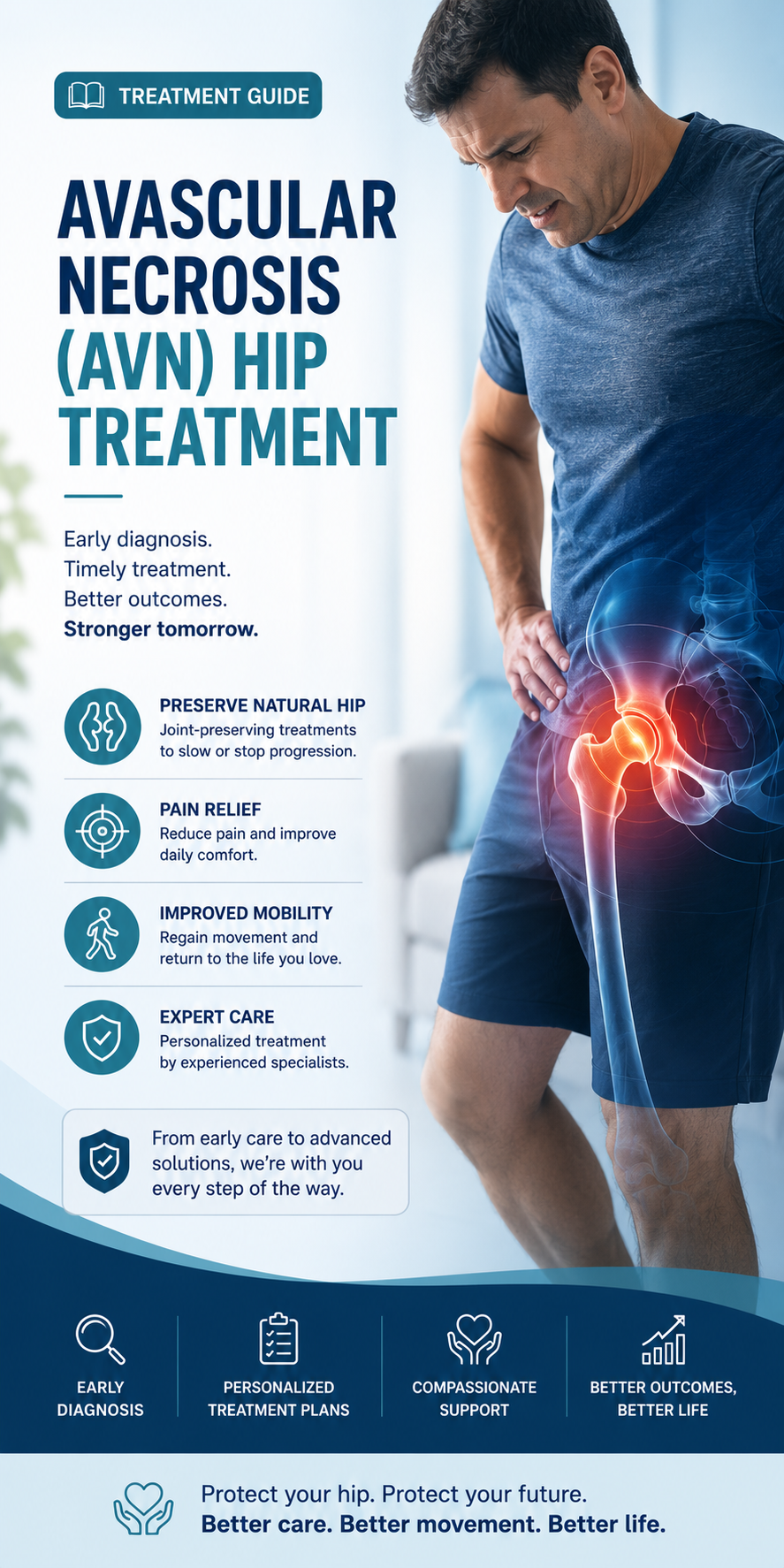
Treatment depends on the stage of AVN. Early-stage disease may benefit from medications and joint-preserving procedures, while advanced stages often require surgical intervention such as hip replacement.
Activity Modification
Reducing stress on the hip may slow disease progression.
Medication
Pain management and supportive treatment help relieve symptoms.
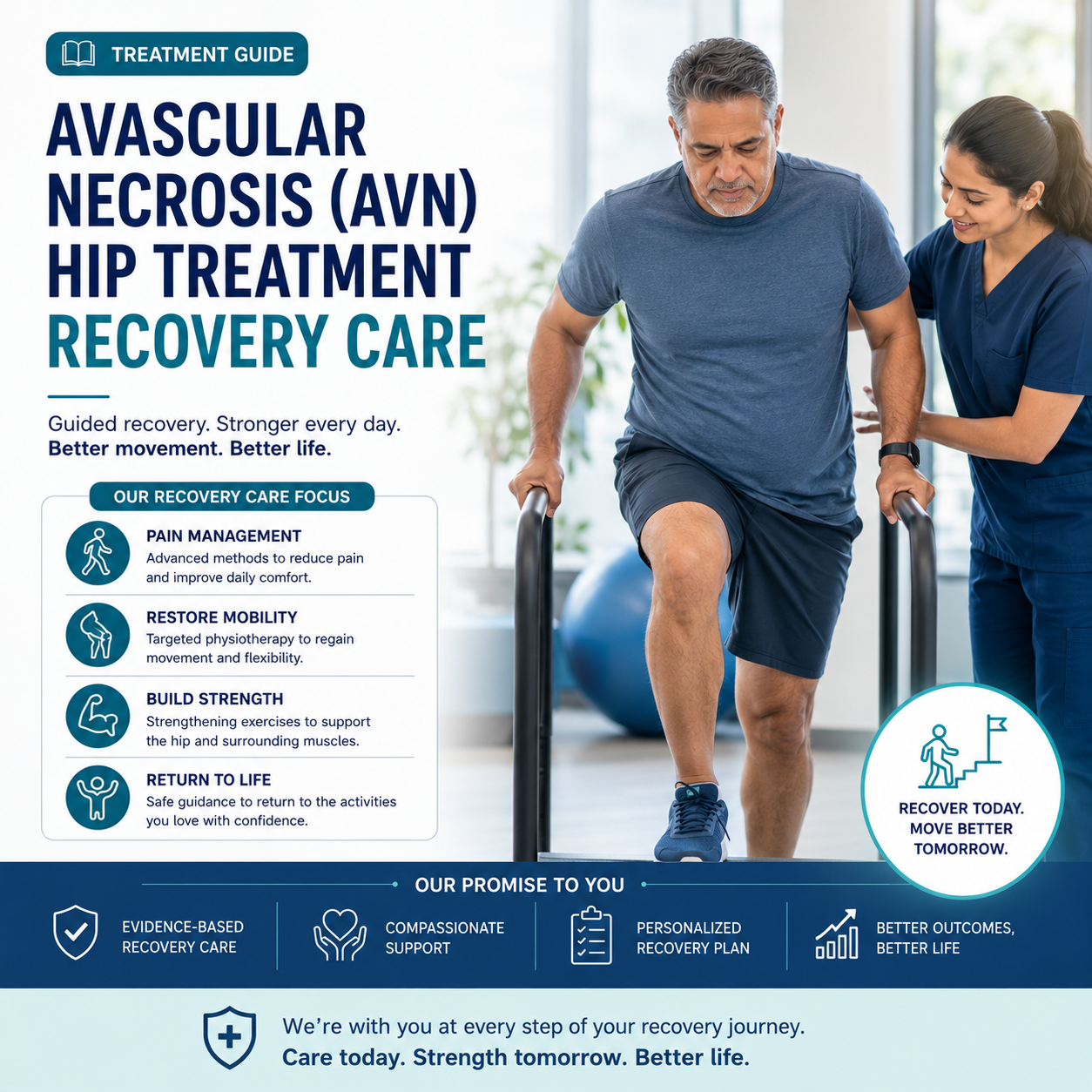
Physiotherapy
Maintains flexibility and muscle strength around the hip.
Biologic Therapies
Selected patients may benefit from advanced regenerative treatments.
Targeted Injection Therapy
Used selectively for symptom management.
Core Decompression
Improves blood flow and reduces pressure within the femoral head.
Bone Grafting Procedures
Supports bone regeneration and structural stability.
Total Hip Replacement
Recommended for advanced AVN with femoral head collapse and severe joint damage.
Recovery Timeline for AVN Hip Treatment
Recovery depends on disease severity and treatment type. Early diagnosis significantly improves the chances of preserving the natural hip joint and delaying joint replacement.
-
Weeks 1-6
Pain Management Symptom control and activity modification.
-
1-3 Months
Joint Preservation Phase Early-stage AVN treatment focuses on preserving the femoral head.
-
3-6 Months
Functional Recovery Mobility and strength gradually improve.
-
3-6 Months After Surgery
Post-Surgical Recovery Patients regain mobility following hip procedures or replacement.