
Lumbar Spine Treatment
Advanced Treatment for Lower Back Pain, Slipped Disc & Sciatica
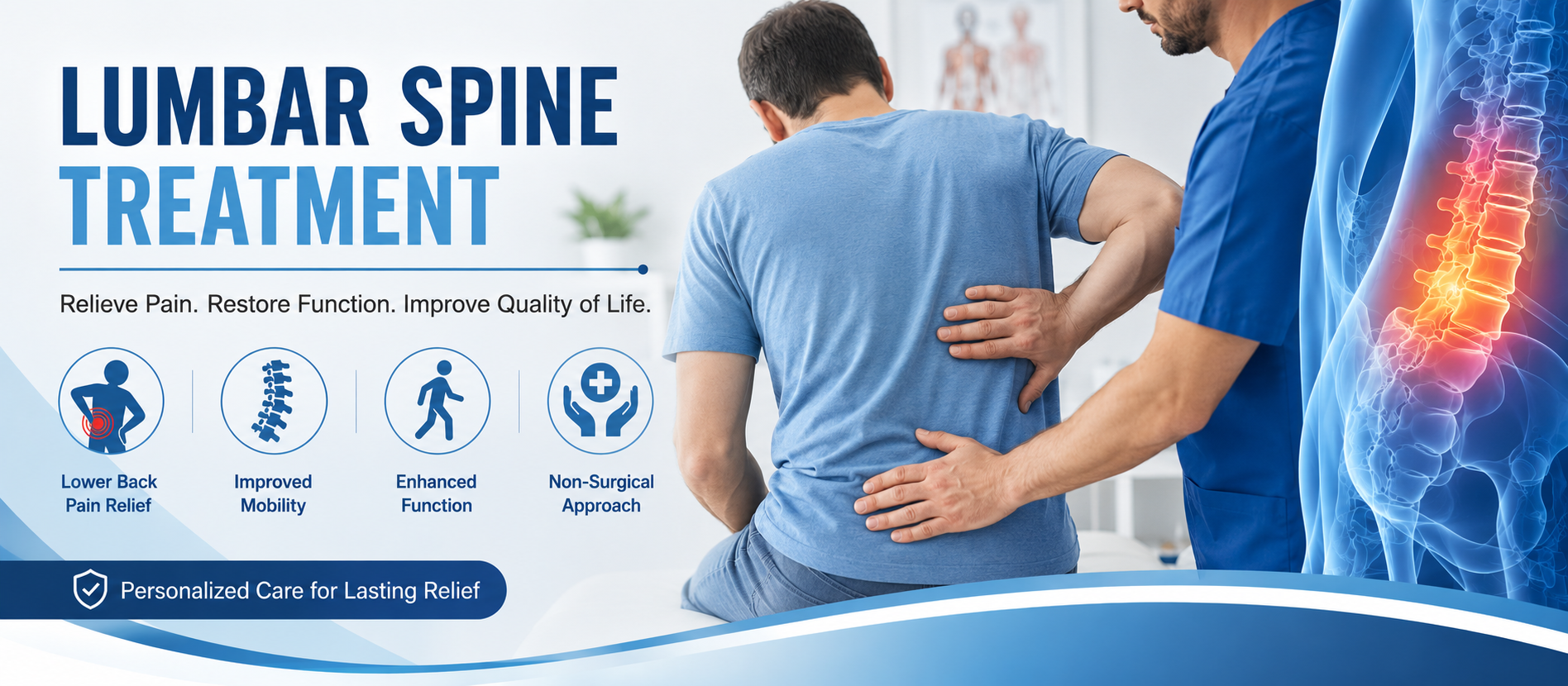
Expert lumbar spine treatment for lower back pain, disc bulge, sciatica and spinal stenosis using medication, physiotherapy and surgery.
What Is Lumbar Spine Disorder?
The lumbar spine is the lower part of the spine located in the lower back. Lumbar spine disorders occur due to disc degeneration, nerve compression, injury, poor posture, or age-related wear and tear. These conditions commonly lead to lower back pain and pain radiating to the legs (sciatica).
Causes & Risk Factors
Common causes of lower back pain and lumbar spine degeneration
Poor Posture
Long sitting hours increase spinal stress.
Heavy Lifting
Improper lifting can injure spinal discs.
Obesity
Excess weight increases pressure on the spine.
Sedentary Lifestyle
Weak core muscles reduce spinal support.
Aging
Natural disc degeneration occurs over time.
Symptoms of Lumbar Spine Problems
Common symptoms include lower back pain, stiffness, pain radiating to legs (sciatica), numbness, tingling, muscle weakness, and difficulty standing or walking for long periods.
Lower Back Pain
Pain localized in the lumbar region.
Radiating Leg Pain
Pain spreading down the legs (sciatica).
Stiffness
Difficulty bending or moving the lower back.
Numbness
Tingling or loss of sensation in legs or feet.
Muscle Weakness
Reduced strength in lower limbs.
Specialist Explains Lumbar Spine Treatment
Spine specialist explains disc bulge, sciatica, nerve compression and treatment options
Lumbar Spine Treatment
Imaging, procedure stages, and rehabilitation milestones.
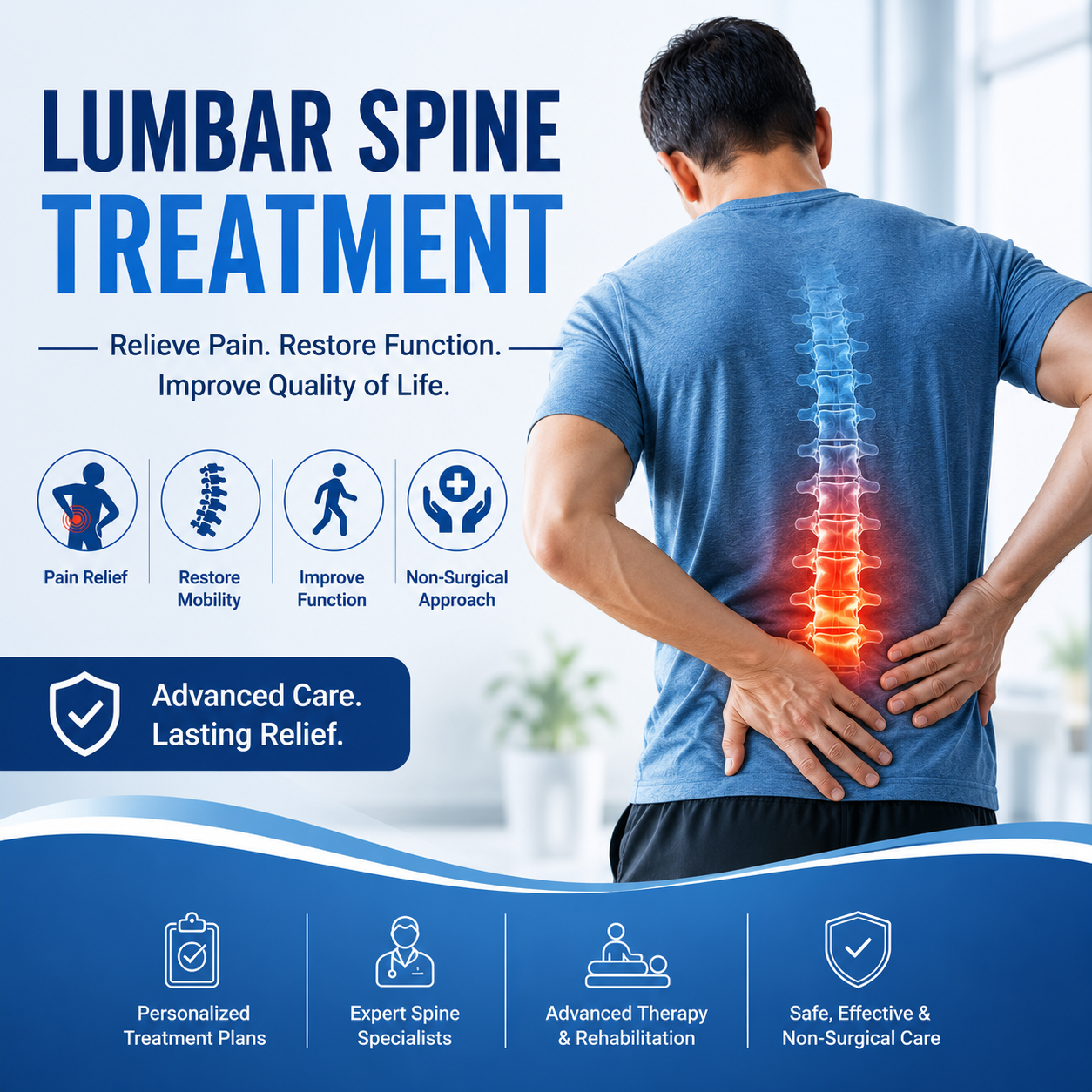
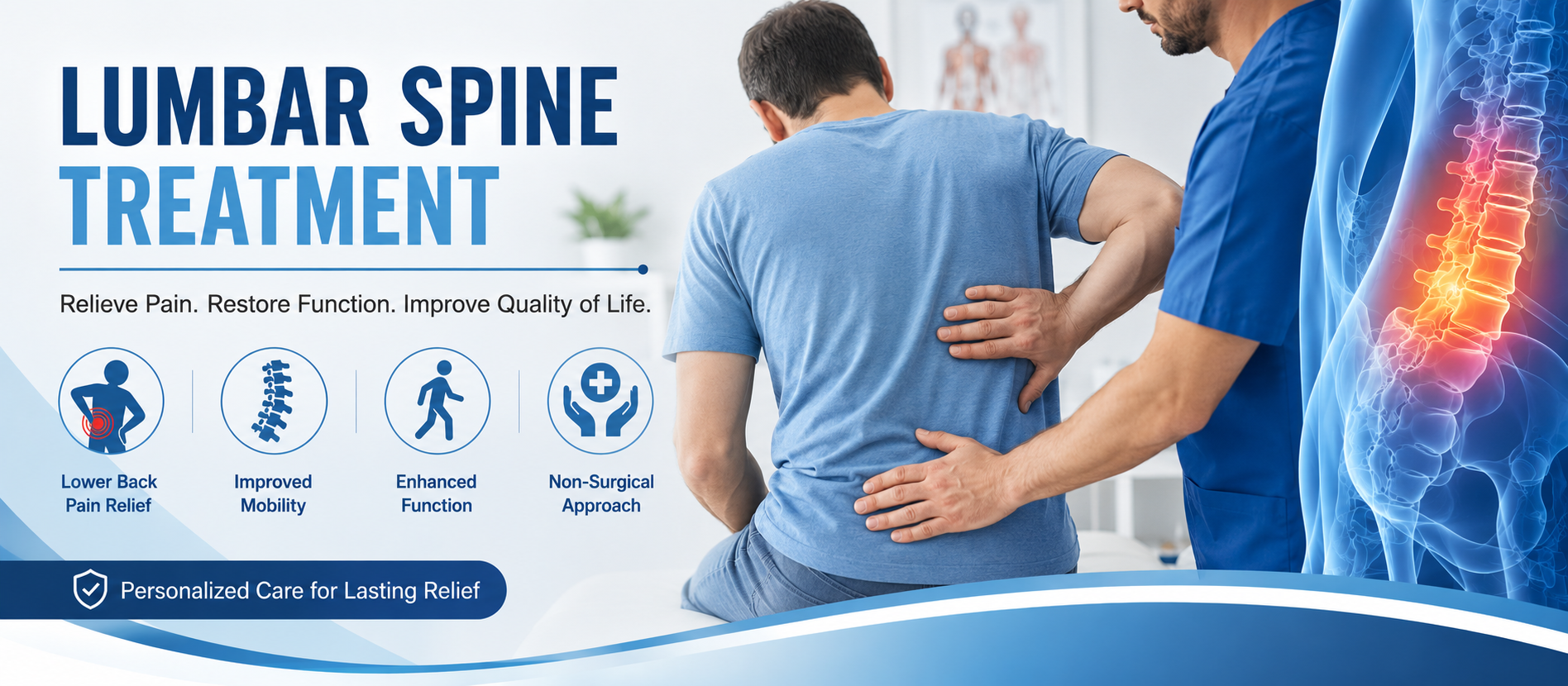
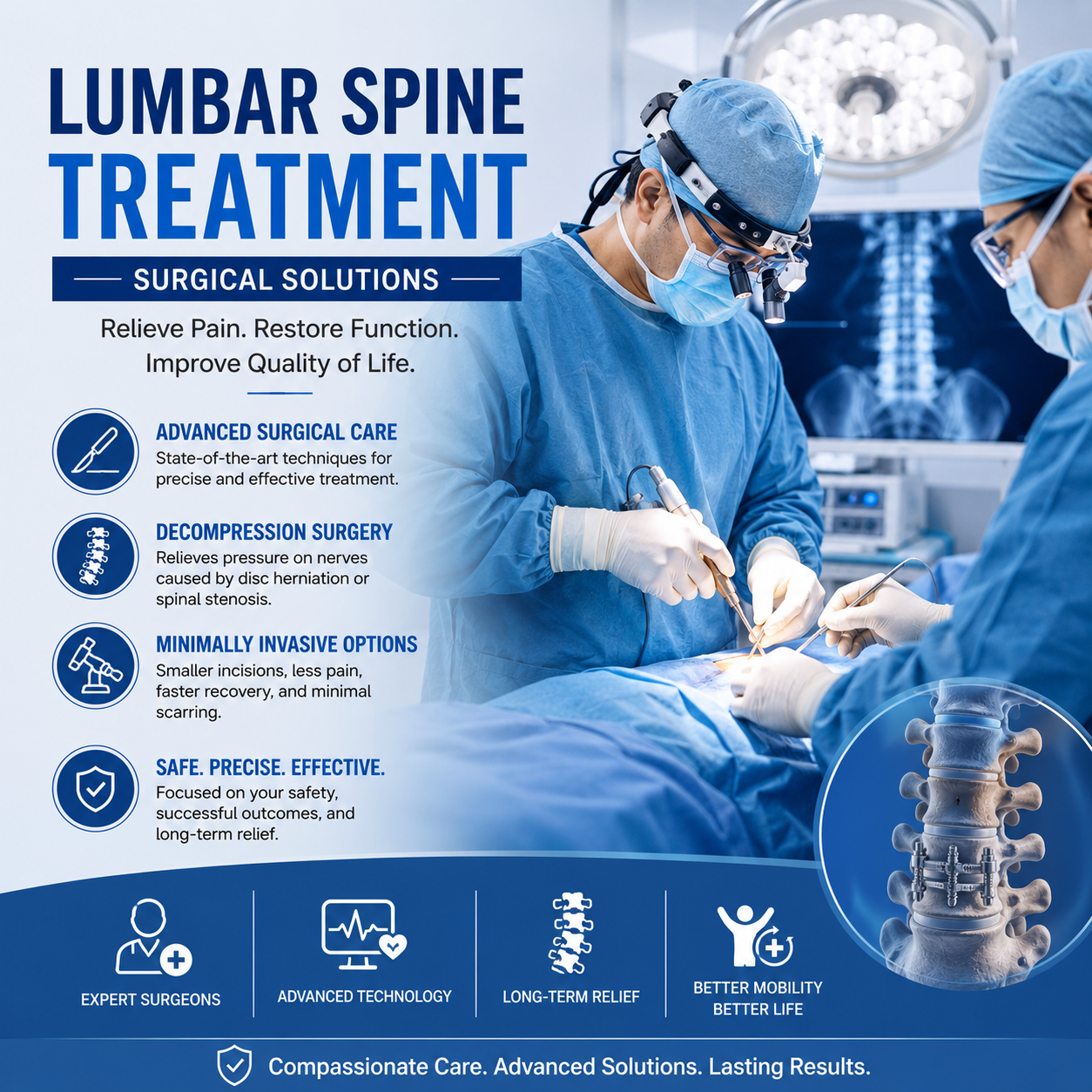
Treatment Options for Lumbar Spine Disorders
Treatment depends on severity and may include rest, medication, physiotherapy, posture correction, spinal injections, and surgery in severe nerve compression cases.
Posture Correction
Proper posture reduces strain on the lumbar spine.
Physiotherapy
Strengthening core muscles improves spine stability.
Medication
Pain and inflammation control with prescribed drugs.
Epidural Steroid Injections
Reduce inflammation around compressed nerves.
Nerve Root Blocks
Targeted injections for pain relief.
Microdiscectomy
Removes part of herniated disc compressing nerves.
Spinal Decompression Surgery
Relieves pressure on spinal nerves.
Spinal Fusion Surgery
Stabilizes the affected spinal segment.
Recovery Timeline for Lumbar Spine Treatment
Recovery depends on the condition and treatment type. Most patients improve with conservative care, while surgical cases require structured rehabilitation.
-
Week 1-2
Pain Management Medication and rest help reduce inflammation.
-
Weeks 3-6
Rehabilitation Phase Physiotherapy improves strength and flexibility.
-
1-3 Months
Functional Recovery Gradual return to normal activities.
-
3+ Months
Long-Term Spine Health Lifestyle changes prevent recurrence.