
Meniscus Injury Treatment
Advanced Treatment for Meniscus Tears, Knee Pain & Joint Locking
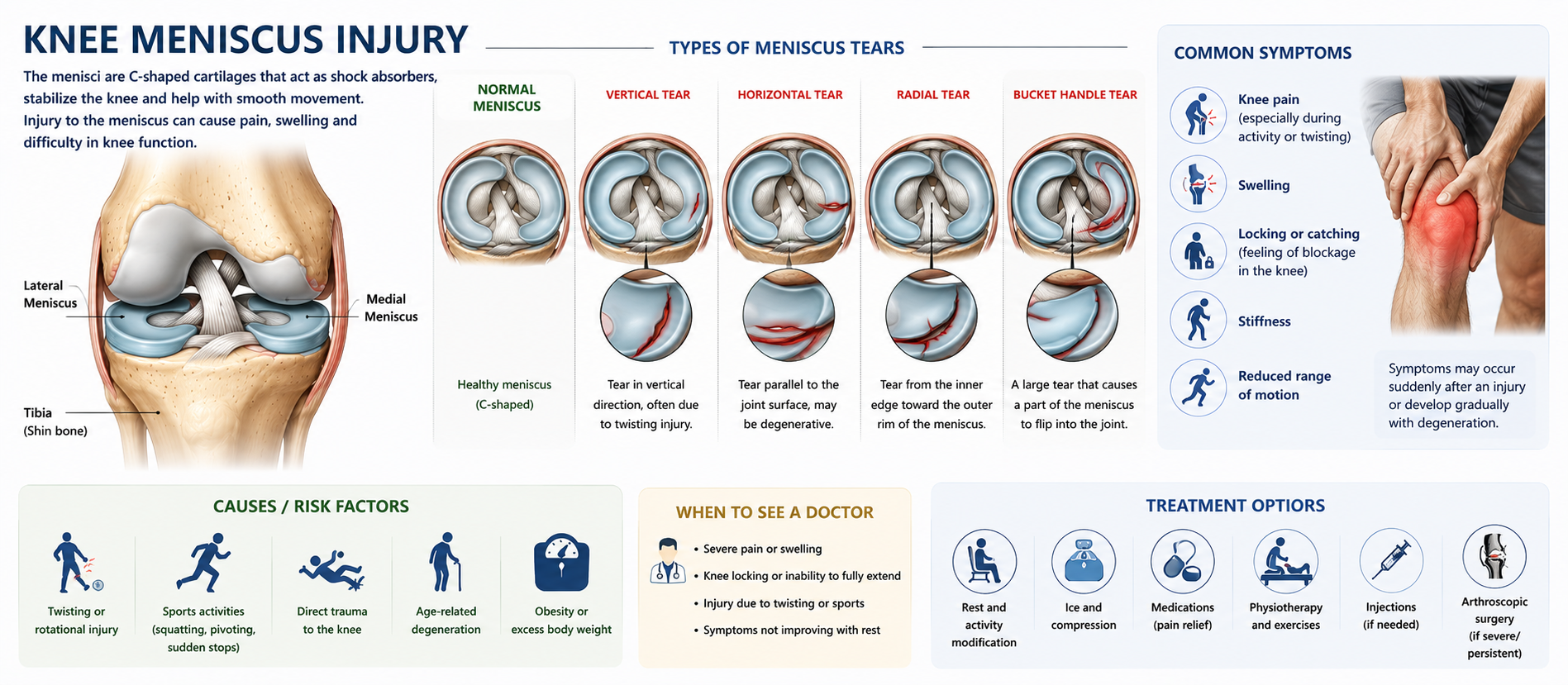
Expert meniscus injury treatment including physiotherapy, injections, meniscus repair and arthroscopic surgery to relieve pain and restore knee function.
What Is a Meniscus Injury?
The meniscus is a C-shaped cartilage structure that acts as a shock absorber between the thigh bone and shin bone. A meniscus injury occurs when this cartilage tears due to twisting movements, sports injuries, sudden pivoting, or age-related degeneration. Meniscus tears can cause pain, swelling, locking, and instability of the knee.
Causes & Risk Factors
Common causes of meniscus tears and knee cartilage injuries
Sports Activities
Pivoting and twisting sports increase injury risk.
Aging
Degenerative changes weaken the meniscus over time.
Previous Knee Injury
Prior injuries increase the likelihood of meniscus damage.
Repetitive Squatting
Repeated stress may contribute to meniscus tears.
Osteoarthritis
Arthritic changes increase susceptibility to degeneration and tearing.
Symptoms of Meniscus Injury
Common symptoms include knee pain, swelling, stiffness, locking, clicking sensations, reduced range of motion, and difficulty walking or performing physical activities.
Knee Pain
Pain is commonly felt along the joint line.
Swelling
Swelling often develops within hours or days after injury.
Knee Locking
The knee may become stuck or difficult to move.
Clicking Sensation
Patients may notice clicking or catching during movement.
Reduced Mobility
Difficulty bending, squatting, or fully straightening the knee.
Specialist Explains Meniscus Injury Treatment
Orthopedic specialist explains meniscus tears, arthroscopic surgery, rehabilitation and return to activity
Meniscus Injury Treatment
Imaging, procedure stages, and rehabilitation milestones.
Treatment Options for Meniscus Injury
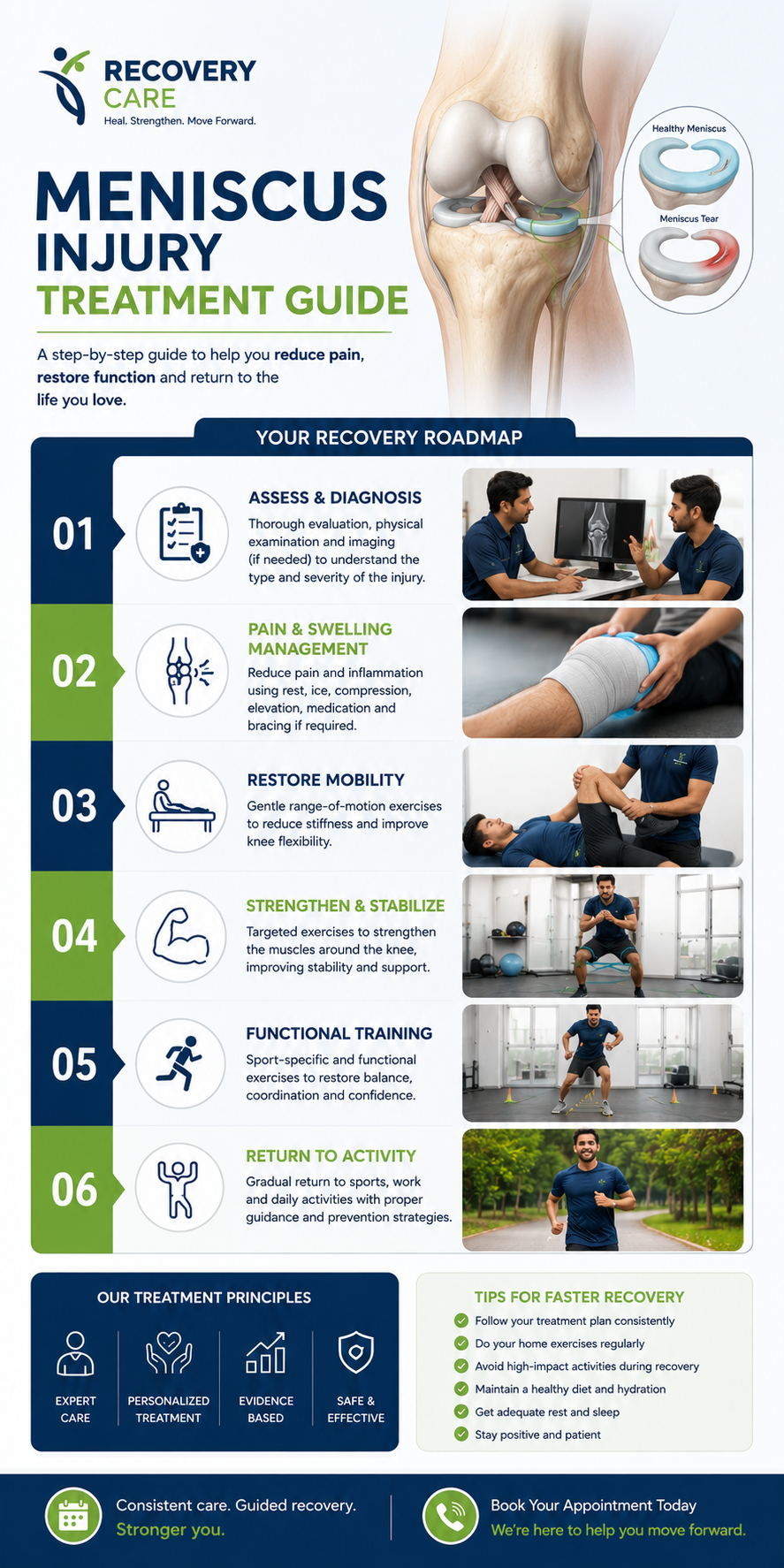
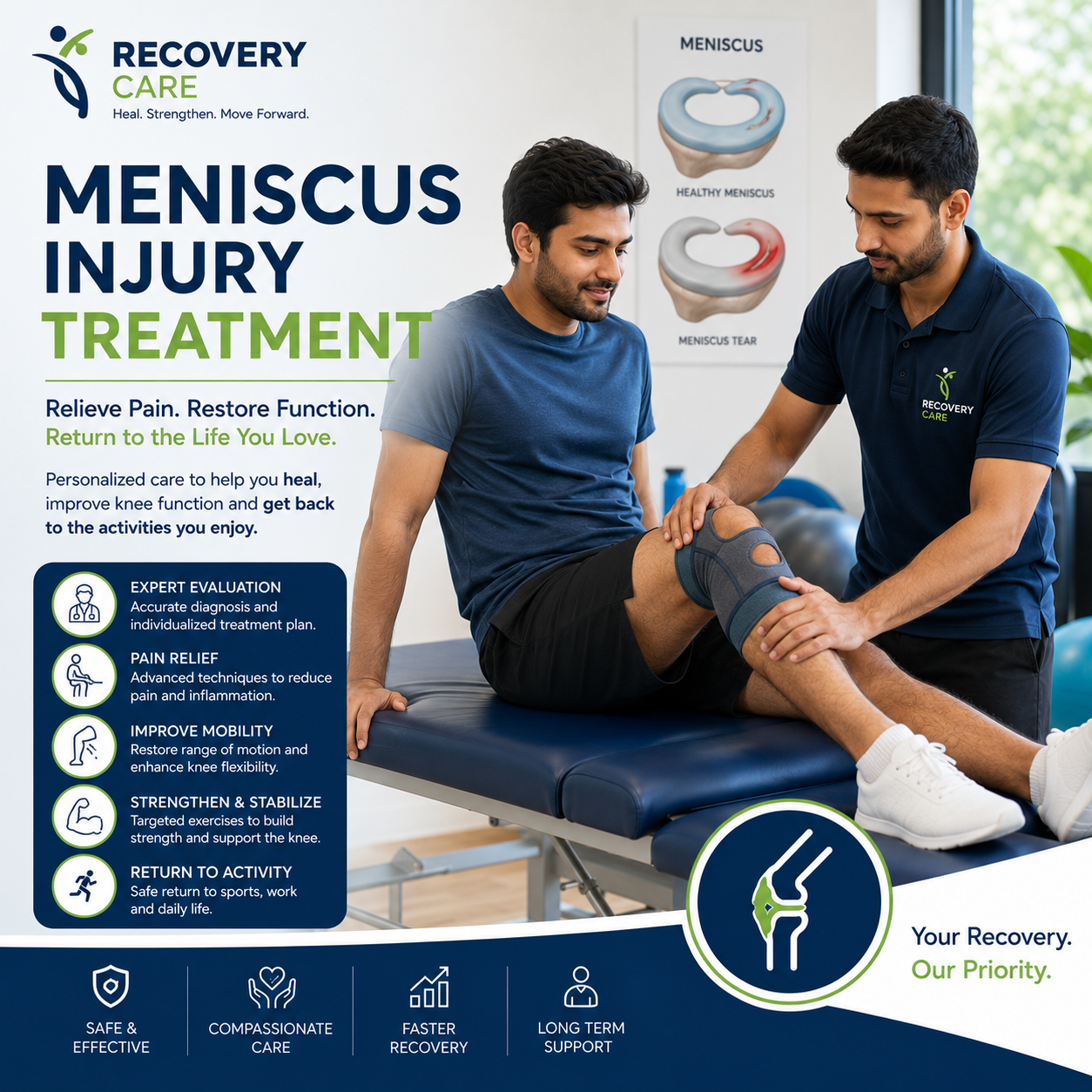
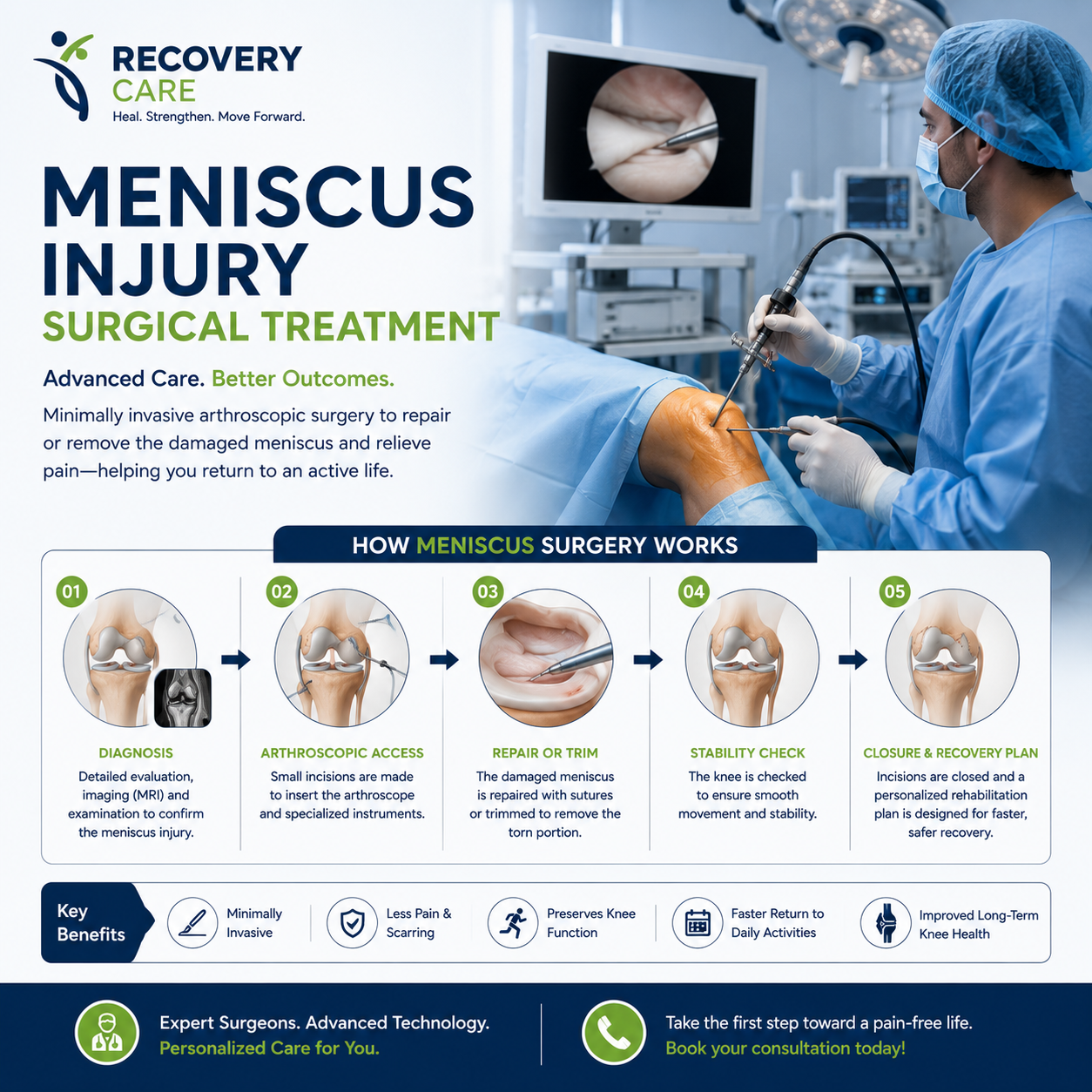
Treatment depends on the location, size, and severity of the tear. Small tears may heal with conservative management, while larger or unstable tears may require arthroscopic repair or partial meniscectomy.
Activity Modification
Avoid movements that worsen symptoms.
Physiotherapy
Exercises improve strength, mobility, and knee stability.
Medication
Anti-inflammatory medications help reduce pain and swelling.
Corticosteroid Injections
May reduce inflammation and pain in selected cases.
PRP Therapy
Biologic treatments may be considered for selected patients.
Arthroscopic Meniscus Repair
Preserves and repairs the damaged meniscus whenever possible.
Partial Meniscectomy
Removes damaged portions of the torn meniscus.
Advanced Arthroscopic Procedures
Minimally invasive techniques restore knee function and reduce symptoms.
Recovery Timeline for Meniscus Injury Treatment
Recovery depends on whether treatment is conservative or surgical. Most patients experience gradual improvement with rehabilitation and structured physiotherapy.
-
Week 1-2
Pain & Swelling Control Initial symptom management and protection of the knee.
-
Weeks 3-6
Mobility Recovery Gradual improvement in movement and flexibility.
-
Weeks 6-12
Strengthening Phase Physiotherapy focuses on restoring muscle strength and stability.
-
3+ Months
Return to Activity Most patients resume normal activities with proper rehabilitation.