Lower Limb Surgery: Advanced Treatment for Hip, Knee, Ankle and Foot Conditions
What is Lower Limb Surgery?
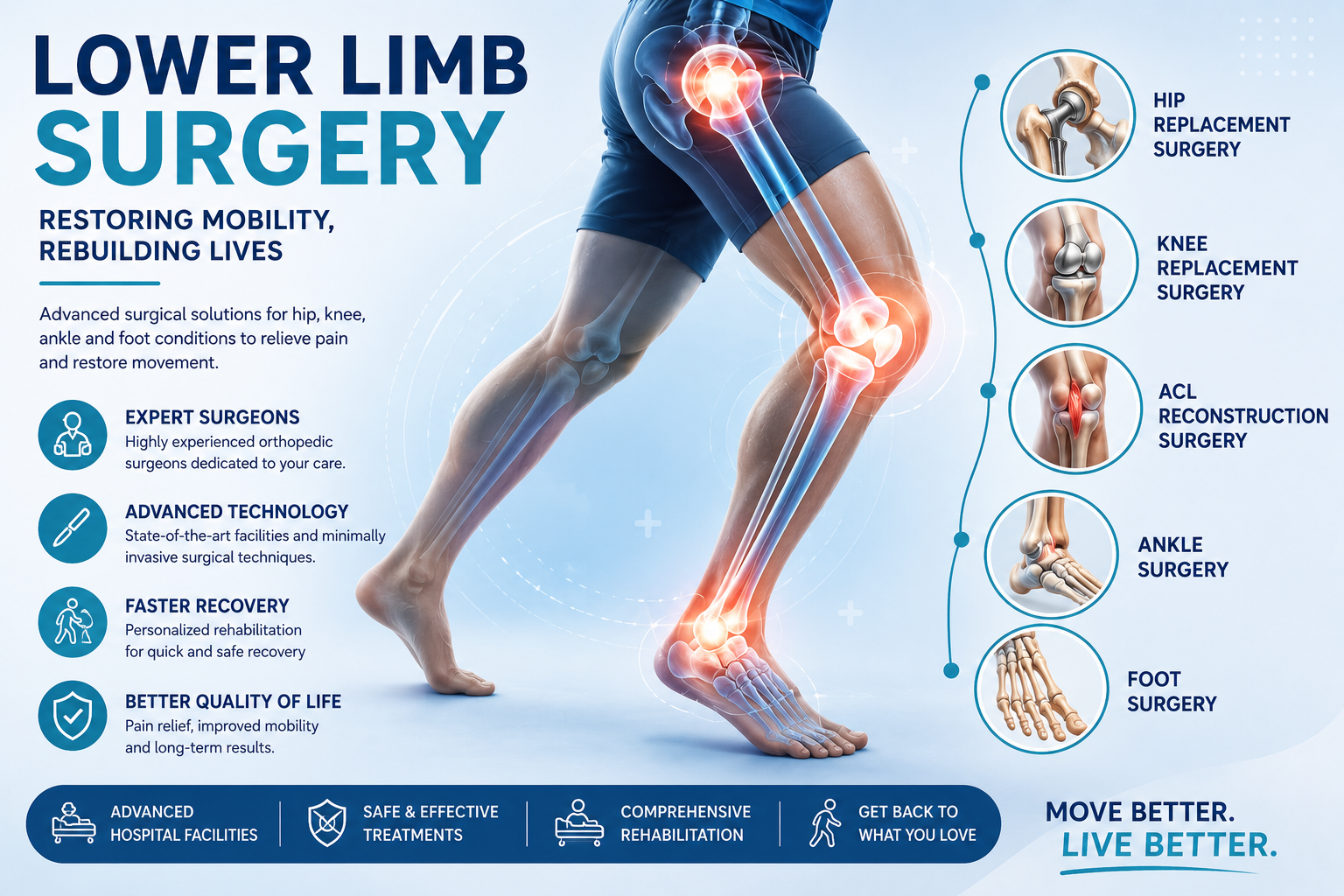
Lower limb surgery is a specialized orthopedic procedure focused on diagnosing and treating conditions affecting the hip, thigh, knee, leg, ankle, and foot. These surgeries help patients regain mobility, reduce pain, and improve their overall quality of life.
When is Lower Limb Surgery Required?
Your orthopedic surgeon may recommend lower limb surgery when non-surgical treatments such as medications, physiotherapy, bracing, or injections fail to provide adequate relief.
- Hip fractures and injuries
- Knee ligament tears (ACL, PCL)
- Meniscus injuries
- Severe osteoarthritis
- Hip and knee joint degeneration
- Ankle instability and fractures
- Foot deformities and injuries
- Sports-related lower limb injuries
- Tendon and ligament ruptures
Common Lower Limb Surgical Procedures
1. Hip Replacement Surgery
Hip replacement is performed to relieve pain and restore function in patients suffering from severe arthritis or hip joint damage.
2. Knee Replacement Surgery
This procedure replaces damaged knee joint surfaces to reduce pain and improve mobility.
3. ACL Reconstruction
ACL surgery restores knee stability after ligament injuries, particularly common among athletes.
4. Ankle Surgery
Used to treat fractures, ligament injuries, chronic instability, and degenerative ankle conditions.
5. Foot Surgery
Performed for bunions, deformities, fractures, tendon injuries, and other foot-related conditions.
Benefits of Lower Limb Surgery
- Significant pain relief
- Improved walking ability
- Better joint stability
- Enhanced mobility and flexibility
- Faster return to daily activities
- Improved quality of life
Recovery After Surgery
Recovery varies depending on the procedure performed. Most patients require physiotherapy and rehabilitation to regain strength and mobility.
- Follow all postoperative instructions
- Attend physiotherapy sessions regularly
- Use assistive devices if recommended
- Avoid excessive strain during healing
- Maintain scheduled follow-up visits
Why Choose Expert Orthopedic Care?
Modern lower limb surgeries utilize advanced technology, minimally invasive techniques, and personalized rehabilitation programs to achieve the best outcomes. Early intervention can prevent complications and improve long-term mobility.
Conclusion
Lower limb surgery offers effective treatment options for hip, knee, ankle, and foot conditions. If you experience persistent pain, difficulty walking, joint instability, or limited mobility, consult an orthopedic specialist to determine the most suitable treatment plan.